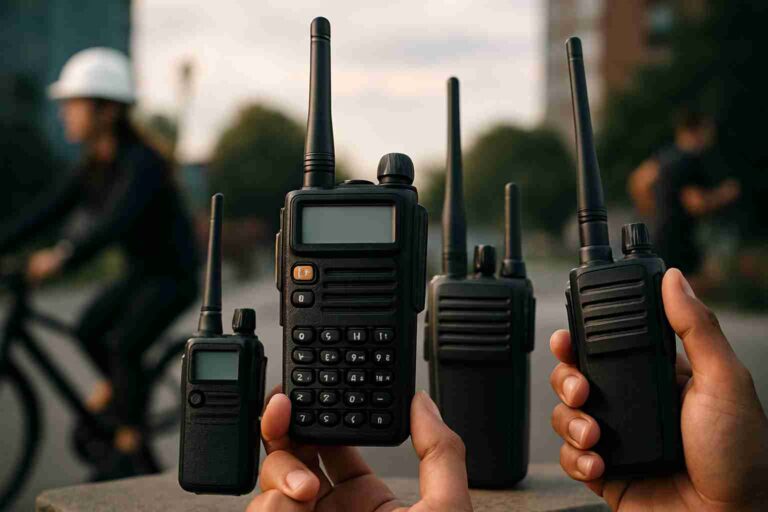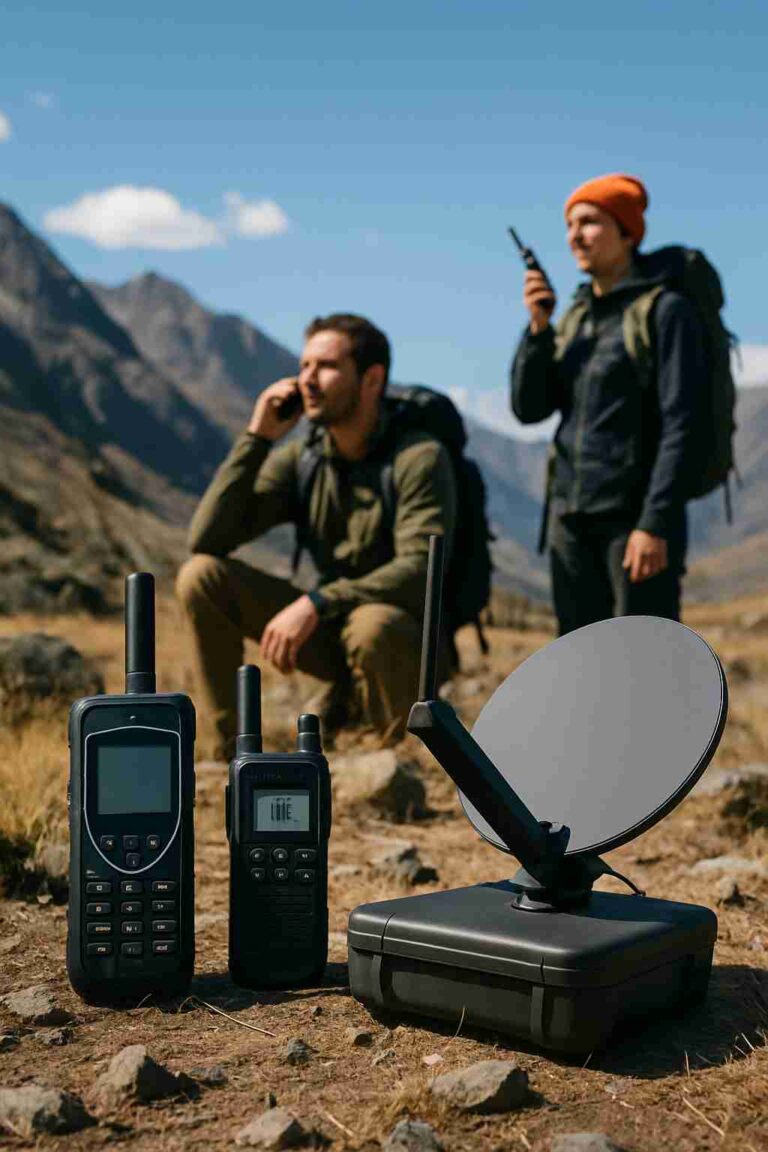
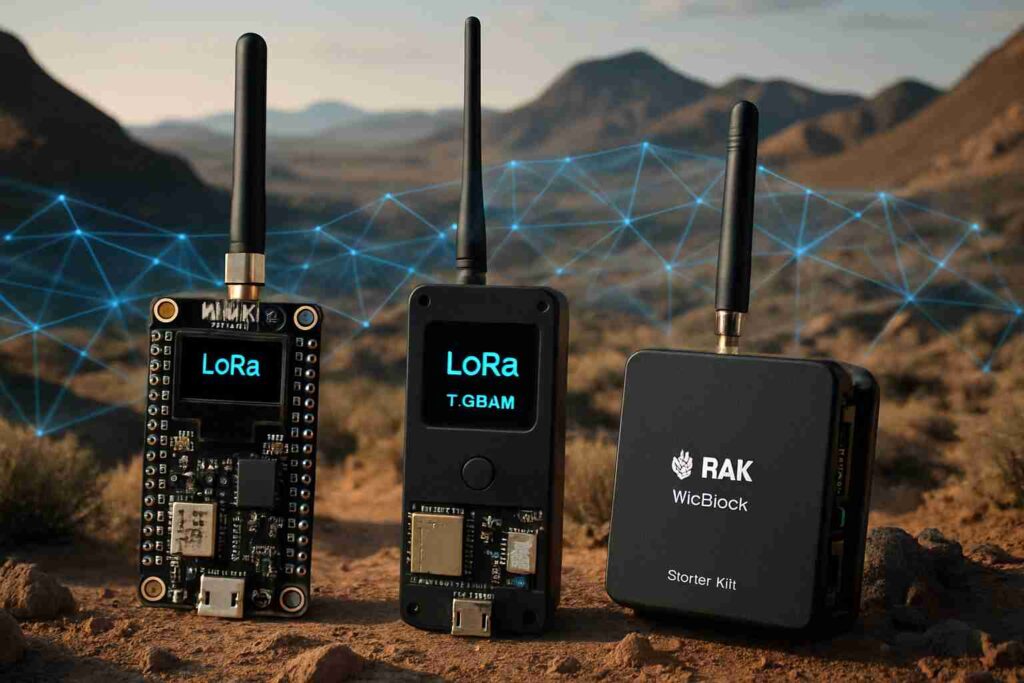
As our world becomes more interconnected, the demand for dependable remote communication equipment has grown significantly. Solutions such as LoRa-based mesh network systems provide ways to sustain communication without relying on conventional infrastructure. This piece delves into essential devices and platforms, demonstrating how they can revolutionize autonomous connectivity in even the most isolated regions.
Understanding LoRa and Its Role in Mesh Networking
LoRa technology marks a substantial advancement in wireless communication, particularly for use cases that demand long-distance connectivity while keeping power consumption low. Its primary strength lies in the capacity to send low-rate data over vast areas, thanks to a strong modulation method that improves penetration through obstacles. This makes it perfectly suited for remote or off-grid locations where conventional communication networks are either unavailable or unreliable.
At its core, LoRa isn’t only about covering large distances. The technology excels by doing so with very low energy use, which positions it at the forefront of communication tech, especially for battery-powered devices or scenarios where power conservation is vital. This is especially relevant in autonomous wireless networking setups, where energy resources are limited.
One remarkable trait of LoRa is its versatility in building communication networks that span wide regions. Depending on terrain and environmental factors, it can achieve transmissions over ten kilometers. This capability proves invaluable in independent communication systems, such as remote search and rescue missions, environmental monitoring, and agricultural wireless networking. By securely linking distant spots, it opens communication channels in areas once considered dead zones.
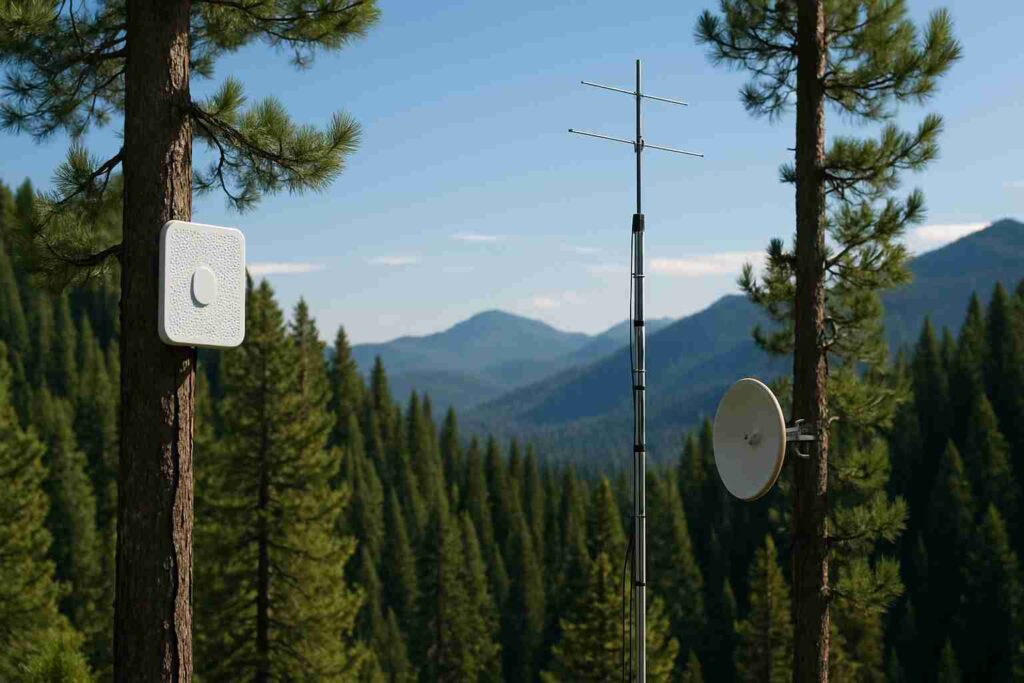
An exciting use case for LoRa technology is in mesh networking, a topology relying on node-to-node links. This LoRa wireless mesh networking bypasses line-of-sight limitations by enabling data to hop from one node to another, ensuring seamless transmission across rugged or expansive landscapes. Such decentralized wireless communication significantly boosts the dependability and strength of networks even in the toughest conditions.
Furthermore, LoRa mesh network systems boast self-healing properties. When a node drops offline or fails, the network automatically reroutes data through alternate pathways, preserving the network’s integrity and continuity. This guarantees that each communication device remains interconnected, enhancing the network’s resilience against disruptions and sustaining uninterrupted data flow.
Such qualities render LoRa mesh communication devices essential in providing stable rural connectivity technologies where traditional telecom infrastructure is missing. Imagine outdoor enthusiasts exploring deep remote locations without cellular coverage; with LoRa-enabled gear, they can keep in contact with each other and the outside world, ensuring safety and communication.
As LoRa advances, its adoption in modern gadgets expands. Selecting the Best Meshtastic Device for Off Grid Comm is critical for users wanting top-notch performance. These devices generally incorporate the pillars of low consumption long-distance technology, packaged into compact, portable systems.
In today’s connectivity-driven world, where safety and efficiency are paramount, combining LoRa with mesh networking delivers an effective solution to bridge gaps in isolated region communication systems. For anyone exploring this space, investing in appropriate autonomous LoRa networking devices can be transformative—not just for personal security but also for enabling reliable communication in otherwise unreachable zones.
Diving into specific examples like the Heltec LoRa 32 V3, the blend of LoRa technology with contemporary innovations becomes clear. This synergy not only enriches our understanding but also sets the stage for more intuitive, adaptive communication solutions in standalone wireless connectivity scenarios. Thus, adopting LoRa and mesh networking goes beyond just using new tech; it pioneers a fresh route for off-grid communication. For more detailed guidance on these devices, refer to another Best Meshtastic Device for Off Grid Comm article to make well-informed, tailored choices.
Heltec LoRa 32 V3 – Versatility and Functionality in Off-Grid Environments
The Heltec LoRa 32 V3 distinguishes itself as an exceptionally adaptable piece of remote communication equipment, designed specifically to fulfill the needs of isolated network communication gear. Compact yet powerful, its feature-rich design provides notable benefits for those aiming to set up dependable communication channels without depending on conventional infrastructure. A standout aspect is its integrated OLED display, offering instant visual cues that simplify configuration and real-time status monitoring, allowing users to maintain effective control over their communications even in secluded spots.
In addition, the Heltec LoRa 32 V3 incorporates both WiFi and Bluetooth functions, enhancing its multifunctionality. These ad hoc wireless networking capabilities enable seamless integration into diverse systems and facilitate interaction with other hardware, supporting smooth data transfers. Whether navigating dense wilderness or a remote outback, the presence of WiFi and Bluetooth ensures continuous connectivity and efficient data transmission.
Another strength lies in the Heltec LoRa 32 V3’s smooth operation within LoRa-based mesh network systems, which are crucial for expanding communication coverage and boosting dependability without relying on centralized network setups. As rural connectivity technologies increasingly gain traction in autonomous wireless networking scenarios, this feature positions the Heltec LoRa 32 V3 as an essential element in building resilient communication frameworks, enabling mesh networks to compensate for the absence of typical telephone or internet access.
Practically speaking, this device proves invaluable across multiple applications. For example, during emergencies when standard networks fail, the Heltec LoRa 32 V3 allows rescue teams to sustain contact over great distances. Its robust network capabilities facilitate message relay from node to node, ensuring prompt delivery. Likewise, adventurers engaged in hiking or camping in isolated areas benefit from the security of staying connected with their groups.
Furthermore, it serves as an effective instrument for agricultural wireless networking. By deploying these modules, farmers can collect and convey sensor data from expansive fields, remaining up-to-date on soil health, weather developments, and crop conditions. This real-time telemetry improves farm operations and supports timely decision-making.
The device’s power-efficient design also reinforces its suitability for standalone communication technology. Employing low-energy extended range systems is indispensable in remote settings where charging is infrequent. This quality guarantees prolonged operation without frequent servicing or battery swaps, a vital factor for installations in hard-to-reach locations.
In essence, the Heltec LoRa 32 V3 represents a state-of-the-art solution for autonomous communication networks, blending durability, flexibility, and performance to satisfy the varied requirements of users seeking the Best Meshtastic Device for Off Grid Comm. Its flawless integration into LoRa mesh connectivity infrastructure not only boosts communication stability but also unlocks vast potential across diverse fields—from environmental tracking to disaster response—making it an indispensable asset in the growing arsenal of remote location connectivity services. Once again, the Heltec LoRa 32 V3 proves a top contender for those searching for the Best Meshtastic Device for Off Grid Comm.
LILYGO T-Beam and Its Impact on Meshtastic Networks
In the world of remote communication technology, the LILYGO T-Beam stands out as a remarkable device, especially when used within Meshtastic networks. Far from being just another addition to the expanding lineup of LoRa-enabled gadgets, this compact and durable tool plays a crucial role due to its extended features, such as integrated GPS and efficient power management, making it perfect for both hobbyists and seasoned adventurers.
The LILYGO T-Beam’s smooth LoRa mesh network interoperability is among its most impressive qualities. By leveraging LoRa technology, Meshtastic forms decentralized mesh networks that facilitate communication over vast distances without depending on conventional cellular infrastructure. This is particularly beneficial for hikers or explorers in isolated spots, allowing them to stay connected with teammates across valleys or thick forests where GPS might be blocked, or standard radio signals weaken.
A core advantage of the LILYGO T-Beam lies in its embedded GPS functionality. Users can accurately monitor their locations and conveniently share this data with others on the network. This capability proves invaluable during coordinated endeavors like hiking trips or search and rescue missions, significantly boosting safety and operational efficiency. The mesh network ensures GPS information is shared effortlessly, keeping everyone informed and synchronized.
Additionally, the device features remarkable energy management, a vital trait when operating in off-grid conditions with scarce charging facilities. Designed with energy efficiency in mind, it prolongs battery life without compromising on functionality. For those in remote settings, having a reliable device that minimizes charging frequency is essential, enabling longer communication periods.
The influence of the LILYGO T-Beam on Meshtastic networks is substantial. Its combined GPS and power management capabilities widen Meshtastic’s practical applications, pushing its role beyond simple messaging into realms where continuous data sharing and extended connectivity become achievable. This is why it consistently earns the title of Best Meshtastic Device for Off Grid Comm, guaranteeing dependable communication in demanding conditions.
Such progress in LoRa wireless mesh networking exemplified by the LILYGO T-Beam is key to improving connectivity in areas where standard infrastructure is lacking or disrupted. Emergency scenarios, which require quick setup and reliable communication, greatly benefit from this innovation. The T-Beam transforms an otherwise difficult communications environment into one that is manageable and dependable.
The wider impact of this technology should not be underestimated. Enhancing the Meshtastic protocol through devices like the LILYGO T-Beam empowers individuals and teams to function safely and effectively in situations where maintaining reliable contact was once problematic. This addresses a critical need in wilderness exploration and disaster response, where conventional communication means often fail.
Ultimately, the LILYGO T-Beam does more than just fit into Meshtastic networks; it elevates their performance. By offering GPS and optimized battery efficiency, it becomes an indispensable instrument for anyone needing autonomous wireless networking. Whether used by hikers, explorers, or emergency teams, it sets a benchmark for what LoRa mesh communication technology can accomplish, truly embodying innovation and dependability in tough environments. This solidifies its status as the Best Meshtastic Device for Off Grid Comm, making isolated locations seamlessly connected.
RAK WisBlock Starter Kit – Building Custom IoT Solutions
The RAK WisBlock Starter Kit serves as a flexible platform designed to address the increasing demand for custom IoT communication solutions, especially in independent communication systems. As our world becomes more dependent on interconnected gadgets, the need for communication technology that is both durable and adaptable intensifies. Thanks to its modular architecture, the RAK WisBlock provides users with an exceptional chance to customize communication setups specifically to fit their individual projects.
At the heart of the RAK WisBlock’s strength lies its scalable IoT development platform, which simplifies the process of assembling and adjusting IoT devices. It supports an array of modules, allowing for seamless integration of diverse sensors, power management solutions, and communication peripherals. Whether you’re an IoT expert or just starting out, this flexibility ensures you can design a system tailored precisely to your requirements.
Regarding LoRa wireless mesh communication technology, the WisBlock’s modular setup offers considerable benefits. Known for enabling wide-area low-energy networks, LoRaWAN technology allows the WisBlock Starter Kit to facilitate the creation of nodes that effortlessly join existing LoRa mesh network systems or help establish new ones. Such networks are vital in delivering rural connectivity technologies in locations where conventional internet infrastructure is either unavailable or unreliable, including distant and underserved regions.
Picture an ecological sensing initiative taking place deep within a forest, where setting up a classic internet connection would prove expensive and impractical. Utilizing the RAK WisBlock, a network of sensor nodes can be developed to track conditions like temperature, humidity, and air quality in the forest. The data gathered by these nodes can be wirelessly transmitted over a LoRa mesh connectivity infrastructure to a central hub, offering detailed insights into environmental shifts without requiring constant physical monitoring.
Another strong use case of the WisBlock is in emergency response. In the aftermath of natural catastrophes, communication networks often face heavy disruption. Quickly deploying a temporary communication network becomes critical. The WisBlock Starter Kit enables building emergency communication devices that connect affected sites with rescue teams, speeding up and enhancing the efficiency of relief efforts.
Additionally, in farming environments, the WisBlock can be employed to generate custom IoT networking technologies that enhance resource use. With data-driven analyses from a network of sensors observing soil moisture and weather patterns, agricultural professionals can optimize irrigation, boosting crop production while minimizing waste.
As global connectivity continues to expand, creating and implementing autonomous IoT connectivity systems with the RAK WisBlock Starter Kit is more than just a technological edge—it’s a meaningful stride toward making connectivity and data-driven analysis universally accessible. Its adaptability to integrate into networks like Meshtastic, in a manner similar to how the LILYGO T-Beam enhances them, cements its role as a versatile tool for any IoT enthusiast aiming for reliable, standalone communication technology. When exploring the Best Meshtastic Device for Off Grid Comm, consider how RAK WisBlock’s versatility offers comparable innovation and connectivity opportunities.
SpecFive Ranger Magnum and Its Off-Grid Communication Potentials
The SpecFive Ranger Magnum stands out as a leading example of innovation within autonomous communication systems. It meets the critical need for dependability in situations where standard communication channels fail. Crafted with durability and sophisticated integration features, this device surpasses being just a tool—transforming into an indispensable asset for smooth connectivity in tough environments.
Foremost, the Ranger Magnum is celebrated for its outstanding range. Extending kilometers across open landscapes, it easily eclipses traditional devices limited by line-of-sight constraints. This makes it a critical component in expansive, uninhabited regions or when navigating rugged terrains, essential for emergency services or fieldwork in remote locations. The ability to sustain reliable communication links in such settings can ultimately save lives.
Its sturdy construction is marked by resilient materials that guarantee performance under severe conditions. Be it extreme temperatures, humidity, or dust exposure, the Ranger Magnum reliably operates without fail. Such robust design renders it ideal for field assignments, where gear toughness is essential. Moreover, the device is compact enough to fit in backpacks and offers user-friendly handling, enhancing its practicality for both outdoor professionals and enthusiasts.
The device’s ability to integrate with LoRa-based mesh network systems adds a significant dimension to its functionality, reshaping autonomous wireless networking. Built for seamless interoperability, the Ranger Magnum easily links with other LoRa mesh communication devices, establishing a mesh network that boosts coverage and dependability. This is especially advantageous in extensive search and rescue operations requiring rapid area coverage.
Practical uses of the Ranger Magnum underscore its significance. Scientists on remote expeditions depend on its long-distance low-power networks to send data back to their headquarters, enabling continuous information exchange without relying on existing infrastructure. Its usefulness also spans the agricultural sector, aiding in wireless data transmission for agriculture by monitoring and controlling equipment scattered over vast farms, fostering the growth of smart farming technologies where connectivity is limited.
During emergencies, the importance of the Ranger Magnum becomes even clearer. When natural calamities disable conventional communication networks, having a durable, autonomous communication system allows first responders to uphold essential communication lines, improving coordination and response effectiveness. Similarly, military missions benefit from its ability to connect with secure networks, providing a tactical edge by safeguarding strategic transmissions across great distances.
For outdoor adventurers keen on independent wireless communication, the Ranger Magnum fulfills the vital need for trustworthy contact with the outside world. Whether trekking through dense woods or camping in remote mountains, this device offers reassurance by keeping help within a simple radio signal.
Incorporating the SpecFive Ranger Magnum into one’s arsenal of remote communication equipment delivers clear advantages. By supporting an ecosystem of communication units, it enhances connectivity, boosts reliability, and allows smooth integration with advanced technologies. As the demand for self-sufficient communication technology rises, especially in sectors thriving beyond traditional networks, tools like the Ranger Magnum will maintain an essential presence. For aficionados of off-network LoRa communication modules, its features perfectly complement the quest for the Best Meshtastic Device for Off Grid Comm, expanding horizons on every journey.
Reflecting on these attributes and applications, the SpecFive Ranger Magnum exemplifies the fusion of state-of-the-art technology with real-world needs. It delivers reliable, far-reaching communication that transforms connectivity in places once deemed unreachable. Exploring such autonomous communication systems reveals the vast potential in advancing communication technology based on LoRa wireless mesh networking, paving the path for innovations set to redefine off-grid communication frameworks.
The Future of Off-Grid Communications and the Role of LoRa Mesh Technology
In the rapidly changing sphere of autonomous wireless networking, LoRa mesh connectivity solutions continue to emerge as a revolutionary element with the capacity to transform communication methods in remote and demanding settings. The outlook for standalone wireless connectivity is clearly optimistic, supported by progress in LoRa wireless mesh communication technology that aims to improve range, resilience, and compatibility with advancing technological innovations.
A particularly compelling aspect of LoRa wireless mesh networking is its potential to significantly expand communication distance. Although existing LoRa mesh communication devices already boast impressive range, ongoing improvements in antenna design and signal efficiency promise to push these limits even further. Looking ahead, the advent of more potent and efficient antennas is expected to dramatically boost the coverage of LoRa networks, which will be crucial for far-flung regions like vast rural landscapes, thick woodlands, or extensive agricultural zones where conventional communication infrastructure is lacking.
Resilience is another critical area where LoRa-based mesh network systems are anticipated to progress notably. As the need for rugged communication devices capable of enduring severe environments grows, forthcoming LoRa mesh networking equipment will likely incorporate advanced materials and structures designed to resist harsh weather, mechanical impact, and long-term exposure. This heightened toughness will be vital for reliable messaging under tough conditions, including emergency service scenarios or isolated research outposts.
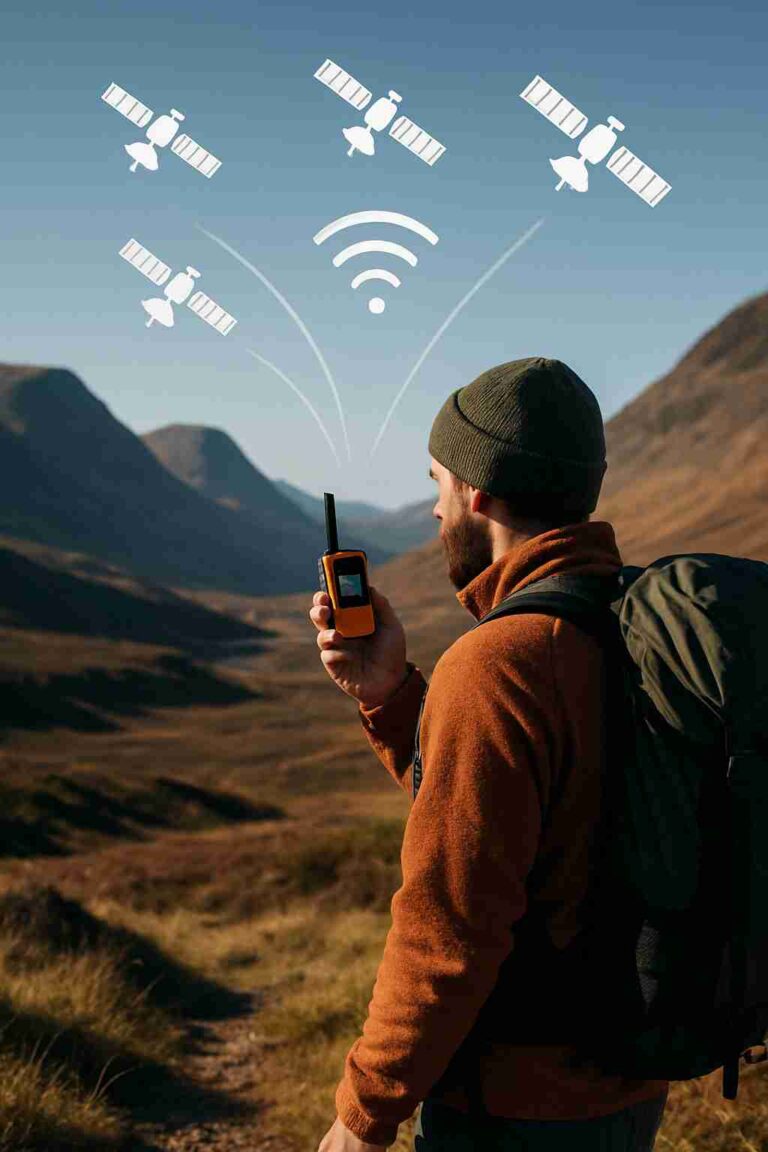
Excelling in the integration with emerging technologies represents a frontier where LoRa mesh network infrastructure is poised to shine. With the ongoing expansion of the Internet of Things, seamless interoperability between varied technologies becomes essential. Future iterations of LoRa mesh connectivity devices are expected to leverage artificial intelligence and machine learning to enhance network efficiency and dynamically adjust to environmental changes. Moreover, coupling LoRa wireless mesh networking with satellite-enabled systems promises uninterrupted links even in the most secluded areas.
These innovations within LoRa mesh connectivity infrastructure hold the promise of transforming communication across diverse applications. Imagine off-grid living communities remaining interconnected internally and with the wider world without dependence on traditional networks. Likewise, adventurers and outdoor enthusiasts can venture into remote terrains assured that LoRa mesh connectivity solutions will safeguard their communication needs.
Additionally, integrating LoRa mesh networks with renewable energy sources like solar or wind power presents an eco-friendly strategy to fuel these standalone communication devices. By utilizing such sustainable energy, LoRa mesh systems can operate independently from conventional electricity grids, guaranteeing steady connectivity in isolated locations.
In industrial contexts, LoRa mesh communication technology can prove indispensable for monitoring and managing machinery situated in remote areas. For example, mining sites or offshore oil platforms can leverage the extended coverage and ruggedness of LoRa-enabled modules to maintain continuous equipment oversight and ensure prompt reactions to operational challenges.
Ultimately, the trajectory for autonomous wireless networking driven by LoRa mesh connectivity devices transcends mere technical enhancements; it unlocks new opportunities and elevates living standards in regions historically underserved by standard communication infrastructures. The continuous evolution of the Best Meshtastic Device for Off Grid Comm exemplifies this progress, demonstrating the adaptability and effectiveness of these networks in fulfilling varied connectivity demands.
By concentrating on improvements that emphasize extended coverage, robustness, and smooth integration, LoRa mesh communication technology is on track to redefine off-grid communication, making it more dependable and accessible than ever before. Moving forward, the effortless connectivity offered by LoRa mesh network systems will be crucial in bridging technology with wilderness, becoming an essential asset for maintaining links in even the most challenging environments. Undeniably, the future shines bright for those ready to explore beyond traditional grid boundaries and harness the full promise of independent wireless communication.
Conclusions
To conclude, standalone communication devices such as Heltec LoRa 32 V3, LILYGO T-Beam, RAK WisBlock Starter Kit, and SpecFive Ranger Magnum, combined with LoRa-based mesh network systems, enable dependable communication across distant locations. With ongoing technological advancements, these autonomous communication systems are set to become increasingly crucial for connectivity, particularly in areas where conventional networks prove insufficient.