In our increasingly connected world, guaranteeing dependable connectivity in isolated areas is essential. Autonomous messaging platforms like satellite connectivity devices, emergency response communication tools, and personal alert beacons are key to staying in touch when conventional networks fail. This article delves into the range of these technologies, their practical applications, and their critical role in standalone emergency communication and remote connectivity.
Understanding Off-Grid Communication Beacons
Understanding off-grid communication beacons uncovers the vital role these devices fulfill in preserving connectivity within isolated and remote locations. Ensuring safety by closing the communication gap when conventional networks are unavailable or disrupted, these beacons are crucial. Given the rise in adventure tourism and off-grid lifestyles nowadays, dependable communication equipment is indispensable for safety assurance and prompt rescue efforts.
Operating independently from typical grid networks, off-grid communication beacons utilize a variety of technologies to send signals virtually anywhere on the planet. In emergencies where conventional communication infrastructure is either absent or significantly damaged, these remote connectivity tools become essential. Leveraging trusted satellite and RF technologies, they transmit distress signals, guaranteeing users can request assistance even beyond the coverage of cellular towers.
Beacons come in several types, each suited to particular circumstances. Among the most familiar and frequently employed are personal locator beacons (PLBs) and emergency position-indicating radio beacons (EPIRBs). PLBs, crafted for individual use, are compact and portable, ideally suited for solo adventurers, hikers, and outdoor security tool users. Typically, they broadcast a distress alert to a government-run satellite network that notifies rescuers of the user’s exact location. What sets PLBs apart is their use of unique, globally recognized signals that command immediate attention upon activation. Conversely, EPIRBs find their primary application in maritime settings. These marine emergency signaling equipment activate automatically upon water immersion, continuously transmitting a signal that search and rescue teams can effortlessly track, making them indispensable in oceanic crises.
The importance of these beacons extends beyond life-saving; it lies embedded in the technology enabling their effective performance. GPS technology significantly aids these devices in pinpointing and communicating precise position data. The distress alerts, usually relayed via space-based communication systems, rely on a vast network that spans great distances, ensuring the call for help is unmistakably received, even in the most secluded spots.
In specialized areas such as aviation, these communication beacons prove invaluable. Aircraft fitted with emergency locator transmitters (ELTs) can autonomously notify authorities following a crash, greatly improving survival odds through faster rescue deployment.
Despite variations in the underlying technology, the essential mission of these units remains focused on safety and rescue. Cutting-edge battery innovations allow these devices to stay operational for extended durations—a critical advantage for adventurers or professionals undertaking prolonged missions in secluded regions.
With humanity pushing further into less-explored territories, tools like the Beacon for off grid communication become increasingly vital. For individuals embracing off-grid lifestyles or professionals operating in isolated zones, these beacons embody the essential nature of maintaining connectivity for safety.
Not only do these communication beacons provide reassurance, but they effectively serve as lifelines. Their capability to connect where other devices falter ensures that off-grid enthusiasts, maritime workers, and personnel in remote tasks can secure assistance precisely when it matters most. Through these beacons, reliable communication and safety transform from mere possibilities into steadfast guarantees, no matter where your expeditions lead.
Satellite Beacons for Remote Communication
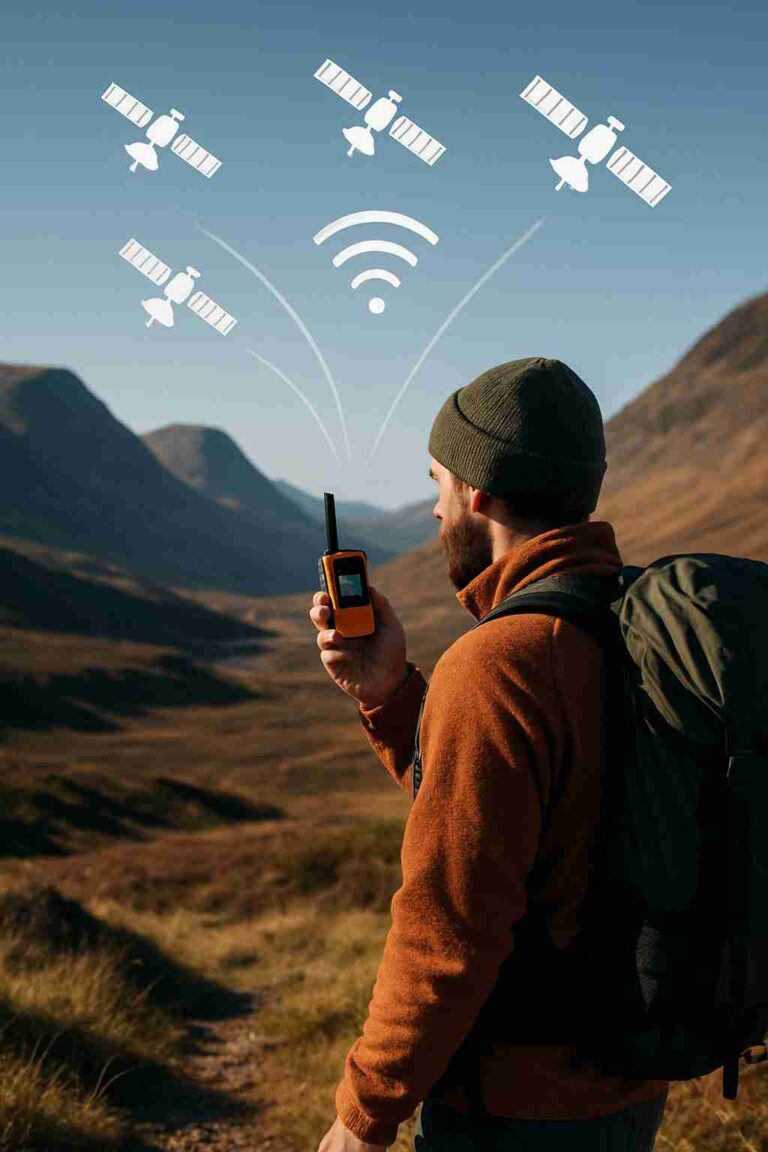
Satellite connectivity devices act as essential lifelines for sustaining connectivity in isolated areas, utilizing advanced technology to guarantee messages arrive at their designated endpoints. Central to this mechanism is the transponder—a unit that captures a signal from an Earth station, boosts it, then re-broadcasts it to another destination. These transponders function within a constellation of satellites orbiting Earth, creating a solid network for worldwide communication coverage.
What makes satellite beacons truly impressive is their capability to offer network access in the most inaccessible locations, where conventional terrestrial communication infrastructure is lacking. This ability is vital in urgent communication infrastructure scenarios where fast, dependable transmission could save lives. The rise in the use of low Earth orbit satellites is due to their proximity to the planet’s surface, which cuts down latency and allows for quicker exchanges. Moving rapidly across the sky, these satellites provide expansive coverage by passing over various areas. Their nimbleness guarantees satellite beacon signal relay with minimal delay, a necessity for both critical communication technology and daily connectivity in remote zones.
Still, despite many positives, satellite connectivity devices have notable drawbacks. A significant hurdle is the expense involved in launching and sustaining a satellite fleet. These high costs can restrict access, especially for users in less-developed regions. Moreover, adverse weather such as heavy rainfall or thunderstorms can disrupt satellite beacon communication signals, causing temporary interruptions. Nevertheless, ongoing technological progress addresses these challenges, making satellite telecom solutions increasingly robust and economical.
The advantages of satellite beacons are extensive, particularly for those in disaster communication technology who depend on immediate contact during crises. This technology enables the transfer of both voice and data, including GPS positioning, allowing rescue units to locate individuals with accuracy. Beyond emergencies, satellite beacons foster global connectivity, helping enterprises tap into distant markets and enabling people to stay in touch with loved ones across great distances. These features highlight the critical role satellites play in building inclusive communication frameworks that surpass geographic boundaries.
Continual advancements in satellite communications infrastructure are set to improve the effectiveness of these beacons for autonomous communication solutions, opening doors for more dependable and accessible systems. Efforts to miniaturize components and enhance energy efficiency are key to making these satellite networking solutions affordable and widespread. As a result, satellite beacons stand as indispensable assets not only for crisis communication systems but also for narrowing the digital gap in underserved territories. With the evolution of satellite communication technology, we anticipate deeper integration between terrestrial and orbital networks, delivering smooth and constant connectivity on a global scale.
Emergency Beacon Devices: A Lifesaver in Distress
In the field of off-grid safety, emergency beacon devices are indispensable tools. These devices, primarily employed in life-or-death scenarios, emit vital distress alerts that can be crucial for survival. A prime illustration of this technology is the Emergency Position Indicating Radio Beacon (EPIRB).
EPIRBs, designed specifically for maritime emergencies, are compulsory in many nations for specific ship categories. Their main role is to transmit a coded distress signal over an emergency frequency. Once triggered, an EPIRB interacts with satellites within the Cospas-Sarsat network—an international satellite communication system dedicated to search and rescue (SAR) efforts. This network swiftly forwards the emergency alert to terrestrial stations, enabling rescue teams to locate the beacon and dispatch assistance.
Experience from users indicates that swift and precise signal broadcasting can mean the difference between a rescue success and disaster. Therefore, the ability of EPIRBs to function efficiently even in harsh environments, such as turbulent seas or isolated locations, highlights their significance. Their sturdy construction guarantees these devices are waterproof and buoyant, essential qualities during sea-related emergencies.
The performance of emergency beacons like EPIRBs is regulated by global standards, ensuring every unit adheres to strict reliability and operational criteria. For example, EPIRBs are required to maintain continuous transmission for a minimum of 48 hours and operate within a temperature range of -20°C to +55°C. These regulatory demands ensure that the beacons remain dependable under extreme conditions, providing a vital safeguard for individuals entering hazardous areas.
Beyond maritime usage, Personal Locator Beacons (PLBs) fulfill similar roles for land and air scenarios. Portable enough to fit inside a backpack, they can be activated in emergencies, offering hikers, skiers, and aviators a critical communication link when conventional options fail. Despite their compact form, PLBs incorporate advanced technology that allows them to send exact location details, aiding rescuers in difficult terrain.
The significance of devices such as the Beacon for off grid communication is immense. Although alternatives like satellite phones exist, their reliance on network infrastructure or battery longevity makes them less dependable during extended emergencies. Conversely, EPIRBs and PLBs are specifically crafted to be durable and efficient in transmitting distress signals.
Aside from technical attributes, prospective users must also be mindful of legal and national rules governing these devices. Many countries demand registration of emergency beacons, linking them to the owner’s identity. This crucial procedure accelerates rescue efforts, as authorities can promptly verify distress signals and access essential personal information to optimize their response.
To conclude, emergency beacon devices represent the cutting edge of off-grid safety technology. By enabling communication with satellite systems like Cospas-Sarsat, they provide a reliable fallback during critical moments, reducing risks associated with outdoor and maritime activities. A thorough understanding of how these beacons operate and comply with regulations ensures users have trustworthy tools to protect lives when normal communication fails. With ongoing technological advancements, devices like the Beacon for off grid communication are expected to deliver even more effective emergency support, enhancing safety globally for adventurers.
Off-Grid Satellite Messengers: Communication Beyond Limits
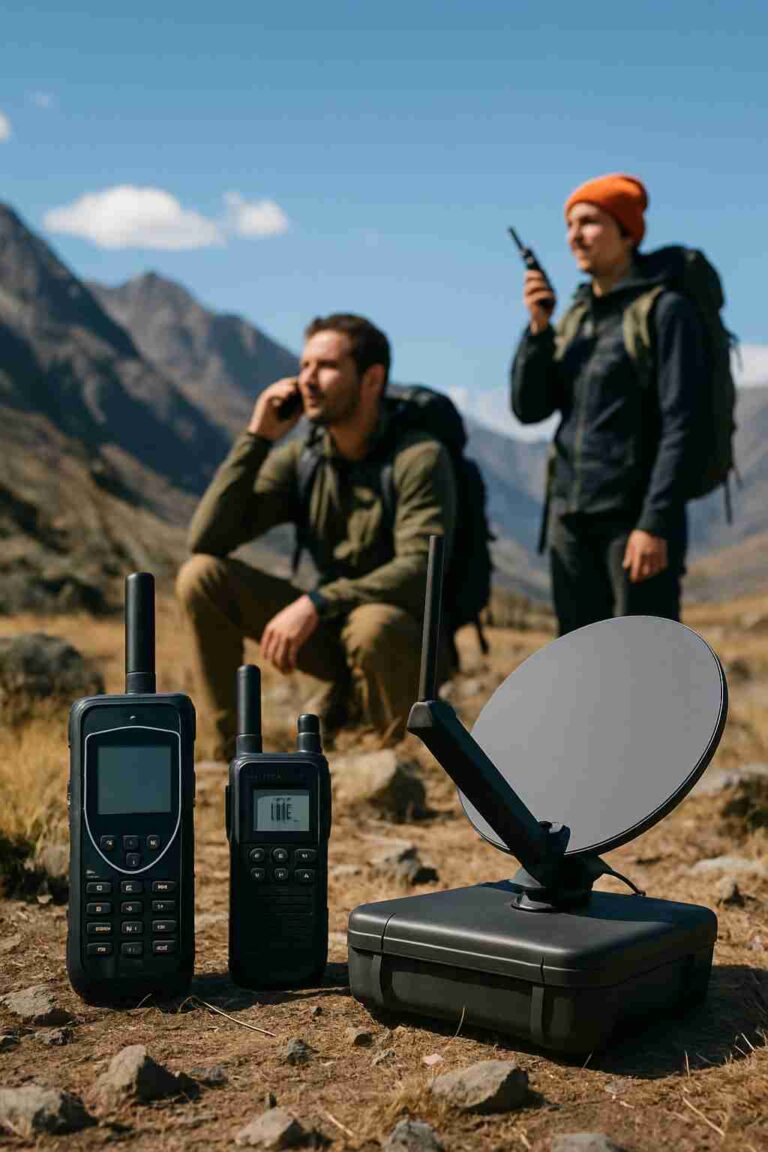
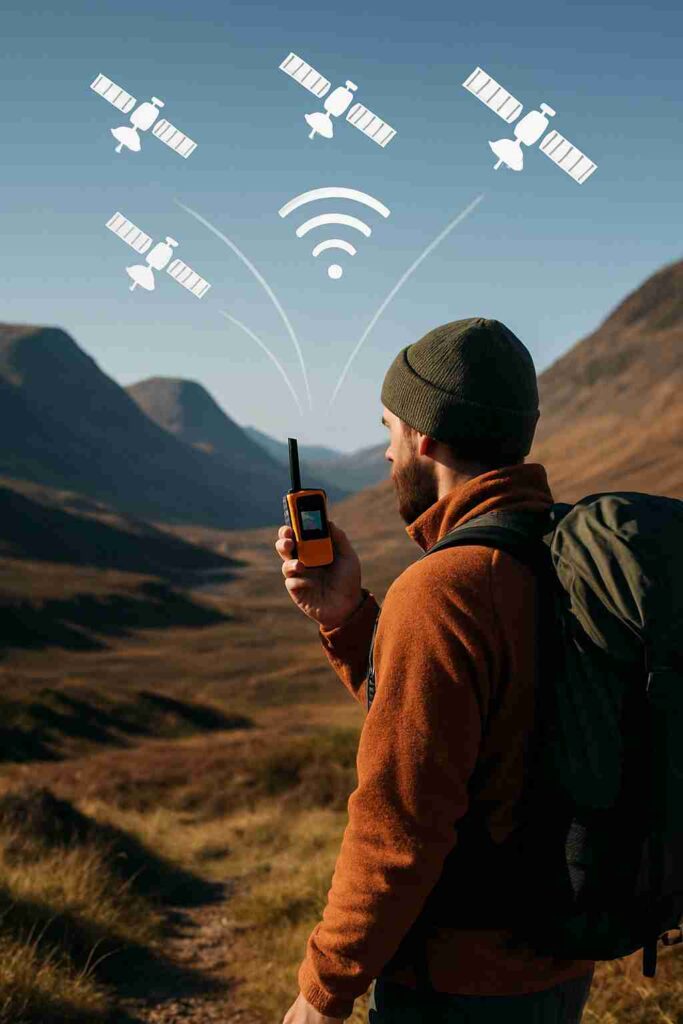
In the immense wilderness where standard communication methods fail, satellite connectivity devices emerge to close the distance. Crafted for remote communication systems via satellites, these gadgets offer vital support for adventurers who venture into uncharted territories. Unlike typical mobile phones that depend on land-based towers and infrastructure, satellite communication equipment link through satellite networks, delivering an expansive reach that surpasses physical borders. This extensive coverage forms the foundation of their value in places where usual cellular signals are absent.
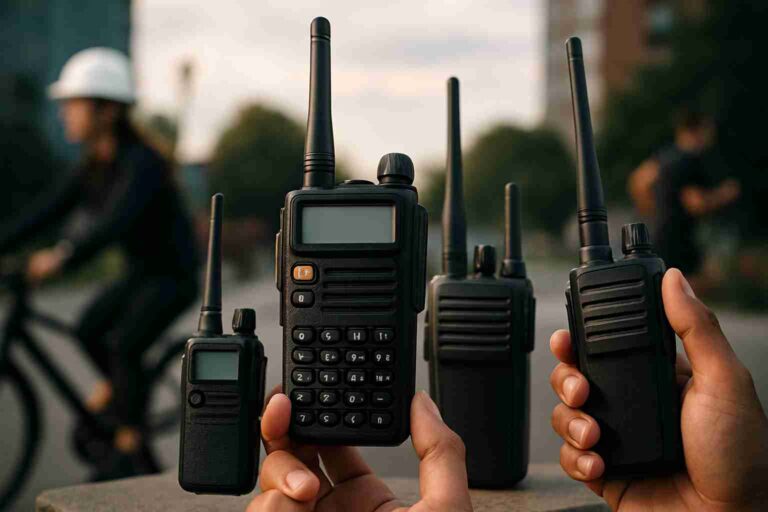
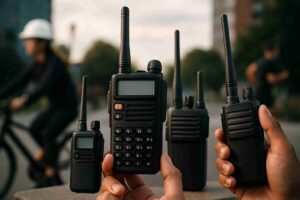
Embarking on journeys into isolated environments for hiking, camping, or other outdoor activities makes staying in contact a real test. While conventional two-way radios serve well for nearby interactions, their limited range and line-of-sight requirement restrict them. Conversely, satellite messengers leverage satellite constellations orbiting far above Earth, granting a direct communication channel regardless of terrestrial blockades. This feature positions them as essential devices for keeping an open line to the outside world.
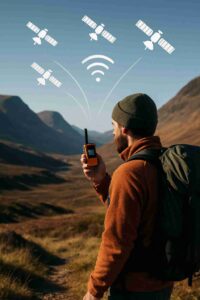
Picture yourself navigating a dense forest or ascending a peak where cellular reception doesn’t reach. A Beacon for off grid communication ensures you stay connected with your safety network, able to send preset alerts or call emergency services when necessary. This tool is far more than a convenience—it’s a crucial safety measure capable of directing rescue teams to your exact spot during critical moments.
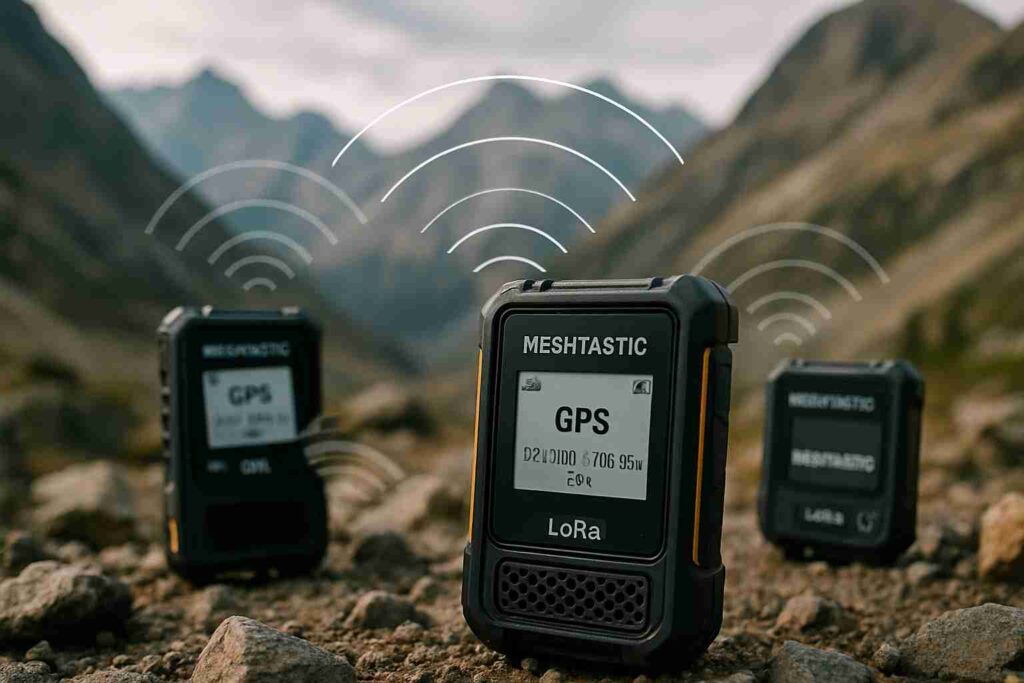
Satellite messengers offer more than just text messaging. Many are integrated with GPS satellite tracking systems, enabling users to transmit their precise location. This capability is vital during emergencies, significantly shortening the time needed for search and rescue operations. Additionally, certain models include tracking functions, giving friends and relatives the ability to follow an adventurer’s route live from any place worldwide.
As outdoor adventures gain momentum, the demand for trustworthy off-grid communication technologies grows. Satellite messengers have become must-have gear for dedicated explorers. Their independence from traditional networks makes them ideal for terrains ranging from barren deserts to dense rainforests. Carrying a Beacon for off grid communication can turn a solitary expedition into a safely supervised venture.
The robustness of these tools comes from their design and the satellite communications infrastructure they rely on. Built to endure harsh conditions, their satellite links guarantee messages are dispatched and received even in the most remote spots. This ruggedness, combined with the pervasive satellite network coverage, makes them indispensable for ensuring safety and consistent communication amid wilderness adventures.
Ultimately, satellite messengers break down limits, empowering explorers to extend the boundaries of their journeys with the confidence that assistance is merely a signal away. For nature enthusiasts, these devices are more than gadgets—they are dependable partners on the path beyond civilization’s reach.
Personal Locator Beacons and Their Role in Off-Grid Safety
Serving as an essential component of off-grid safety, Personal Locator Beacons (PLBs) offer unmatched reassurance for individuals exploring distant locations. These compact gadgets are created specifically to send distress alerts, guaranteeing that assistance is merely a button press away even when traditional telecommunication networks are unavailable.
PLBs function through a simple yet remarkably efficient process. Upon activation, they send a distinctive distress signal via satellite communication systems to a global network, notifying nearby rescue teams of the user’s exact GPS position. This swift satellite beacon signal broadcast is vital during emergencies, where every moment is crucial. Employing satellite connectivity devices allows the alert to bypass cell phone coverage limits and two-way radio restrictions, ensuring the notification reaches the proper authorities. This independence makes PLBs indispensable for hikers, sailors, and explorers venturing beyond conventional network boundaries.
Another notable benefit is the portability of PLBs. Unlike larger equipment, these beacons are small enough to slip into a pocket or fasten to a backpack. Their compactness encourages users to carry them constantly, reducing the chance they’ll be forgotten. Additionally, built to endure tough environmental challenges—from heavy precipitation to biting cold—they remain reliable precisely when needed.
The user-friendly design of Personal Locator Beacons cannot be overstated. They are often equipped with a single activation button to trigger the SOS function, making them accessible even to those with little technical experience. This straightforward operation proves crucial in high-pressure situations by minimizing complexity and decreasing the risk of mistakes when deploying the device.
Real-world examples demonstrate the life-preserving impact of PLBs. Numerous rescues have been expedited thanks to these devices, such as hikers saved within hours in isolated mountain regions following activation of their PLBs. Similarly, sailors facing vessel emergencies at sea can quickly call for aid, potentially preventing life-threatening outcomes. These instances highlight how PLBs play a critical bridging role between danger and rescue.
When selecting a Personal Locator Beacon for remote emergency communication, several aspects should be considered. The battery longevity, reliability of the satellite network, and ease of use are key factors. Many PLBs utilize non-rechargeable batteries designed to last several years, so monitoring expiration dates is essential for dependable operation. It’s also important to evaluate the coverage area of the satellite networking solution used by the PLB to guarantee full reach in your travel zones. Some models boast extra features like confirmation message dispatch or integrated lights, which can be advantageous for certain users.
A frequently neglected but vital practice is the regular testing of your PLB. Becoming familiar with test protocols ensures confidence when activating the device in true emergencies, reducing panic. Registering your beacon with personal details and emergency contacts is equally important, enabling rescue teams to quickly access crucial information and plan appropriate responses.
In conclusion, Beacon for off grid communication devices, as represented by PLBs, constitute a crucial safety investment for anyone engaged in off-grid activities. They provide peace of mind by ensuring help is reachable regardless of the remoteness of the location. With growing enthusiasm for outdoor adventures, the significance of PLBs in emergency preparedness remains clear. Proper usage and upkeep are key to unlocking their full lifesaving potential, making them an essential part of every adventurer’s toolkit.
The Future of Long-Range Communication Beacons
As we explore what lies ahead for long-range communication beacons, it becomes clear that new advancements are set to transform their capabilities, boosting safety and connectivity for adventurers far from civilization. The most groundbreaking progress emerges from the combination of improved GPS precision, longer battery endurance, and seamless integration with wearable connectivity devices.
To start, let’s examine how GPS accuracy might improve. Although present-day systems have already narrowed the margin of error considerably, the quest for even greater precision continues without pause. Anticipating technologies like quantum geolocation systems and breakthroughs in real-time spatial data analysis, we expect communication beacons to deliver exact location information, even deep in isolated areas. This upgrade not only enhances the reliability of Beacon for off grid communication but also greatly increases the odds of swift rescues when emergencies arise.
Regarding energy solutions, major breakthroughs are anticipated to extend the battery life of these digital communication hardware. Incorporating energy-scavenging signal beacons—such as solar panels or kinetic power generators—enables beacons to recharge on their own, even in harsh conditions. This uninterrupted power supply could become crucial for extended expeditions, ensuring your Beacon for off grid communication stays functional exactly when it’s needed. Furthermore, cutting-edge battery innovations, including solid-state and graphene variants, promise greater capacity, faster charging, and enhanced safety versus conventional lithium-ion cells.
Moreover, embedding communication beacons into wearable tech offers a remarkable chance to improve both user experience and security. Advances in smart fabrics and miniaturized computing parts will soon let communication functions blend effortlessly into garments and wearables. This fusion could trigger automatic emergency alerts based on biometric or environmental cues, making certain help is summoned even if the wearer is unable to send a distress message themselves.
Beyond technological progress, regulatory changes are vital to expanding adoption and coverage of these devices. As global standards mature, system compatibility will improve, broadening the reach of satellite and relay networks worldwide. Such steps are critical to guarantee that those trekking remote locations and emergency personnel can rely on a stable communication framework wherever they venture.
Additionally, artificial intelligence and machine learning stand to boost the performance of long-range communication beacons by refining signal processing, forecasting outages, and delivering instantaneous environmental analytics to users. These AI-driven insights will grant individuals actionable data, helping them navigate tough decisions during emergencies.
In summary, the outlook for long-range communication beacons is rich with promise and innovation, heralding remarkable enhancements in connectivity, dependability, and ease of use. As these technologies continue to advance, such devices will become essential companions for explorers and professionals working off the grid, strengthening safety and closing communication gaps globally.
Conclusions
For ensuring safety in isolated regions, off-grid communication beacons remain essential equipment. They close communication voids where conventional networks are ineffective by enabling dependable contact during crises. With ongoing technological progress, these beacons are expected to evolve into even more advanced devices, improving their capacity to maintain safety and connectivity for individuals across various settings.