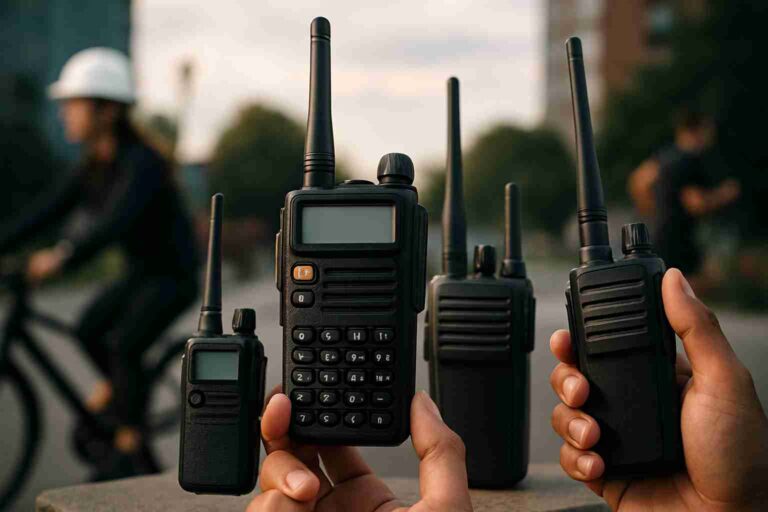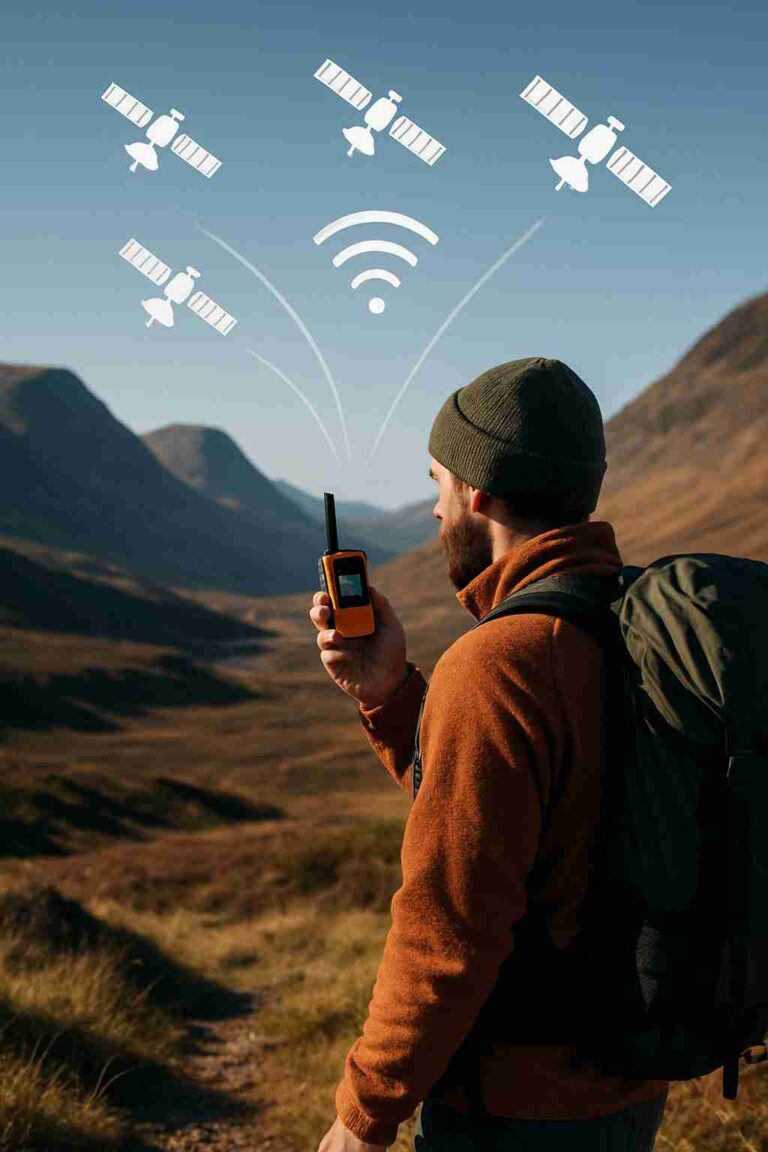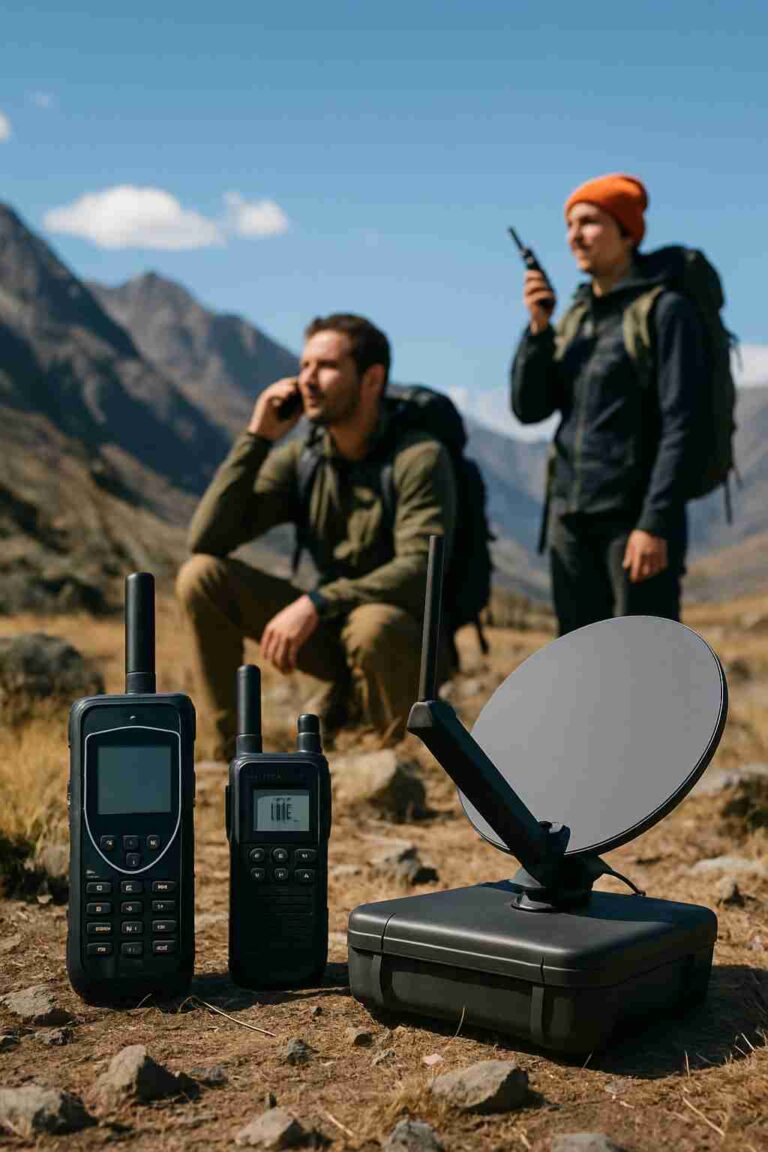
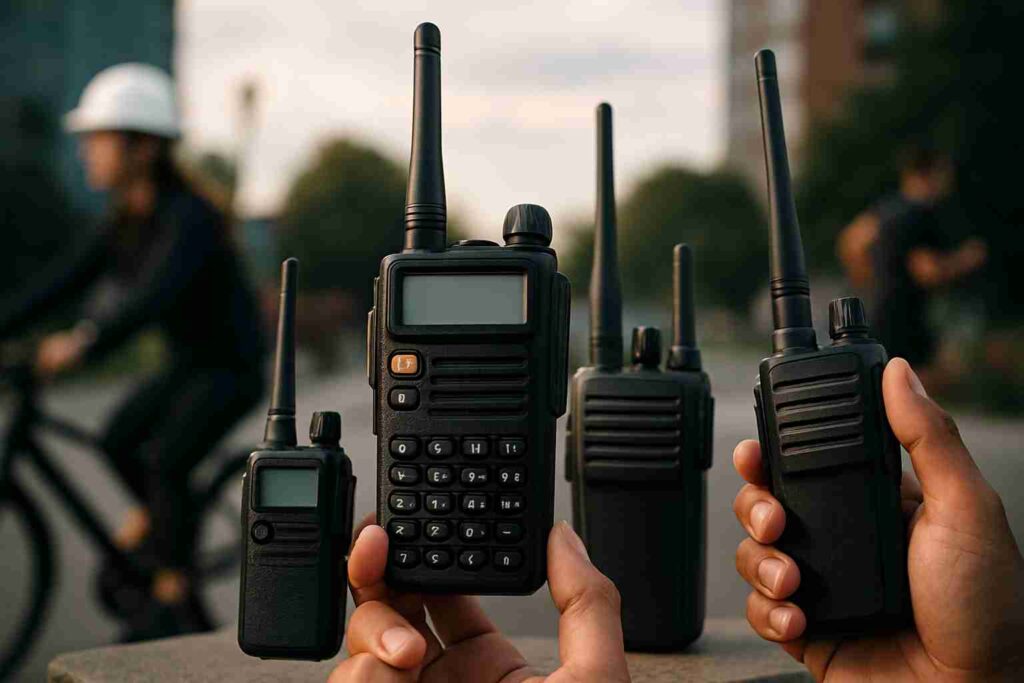
In today’s world, where flawless communication is essential, choosing the right top two-way radios 2024 can greatly improve your connectivity. Whether it’s compact communication devices or professional long-distance radios, this article delves into the premier gadgets that guarantee consistent interaction across diverse conditions. Explore our comprehensive guide to gain insight into the selection process, performance, and advancements powering these indispensable communication solutions.
Understanding Two-Way Radios and Their Significance
For decades, two-way radios have stood as indispensable communication instruments, evolving with technological progress while preserving their essential purpose. When cellular coverage fails, these devices ensure smooth communication by connecting modern convenience with dependable performance, highlighting their increasing importance in today’s tech-driven world.
Originally designed for military messaging during World War II, two-way radios swiftly transitioned into civilian applications, becoming fundamental in industries like construction, public safety, and event management. Their unmatched ability to deliver immediate, direct communication over specific radio frequencies proves vital, especially where mobile signals are weak or missing. This combination of dependability and ease of use guarantees their ongoing relevance.
The latest two-way radios incorporate both analog and digital technologies, each with unique benefits. Analog radios appeal to users seeking straightforward, sturdy communication tools, while digital models offer superior sound quality, extended walkie talkie battery performance, and enhancements like GPS functionality and text communication to support sophisticated operational demands.
Thanks to technological advances, these devices now feature improvements that boost their practicality. Advances in rechargeable communication device batteries have extended operational hours, allowing radios to function through lengthy shifts without pause. Moreover, they can now integrate with devices such as smartphones and public address systems, creating more expansive communication networks.
The critical role of two-way radios becomes even clearer during emergencies. In moments where time is crucial, the prompt exchange of information between team members enables faster, more effective reactions. Unlike mobile phones that rely on sometimes fragile infrastructure, two-way radios provide a more direct communication channel via radio waves.
Although digital transformation has impacted nearly all forms of communication, the need for reliable and autonomous communication lines remains paramount. This explains why various industries continue investing in mobile communication units and systems designed for extended-range communication. Products like the best two-way communication gear demonstrate the advancements made in technology, blending rugged build quality, intuitive interfaces, and impressive range to ensure uninterrupted interaction even in harsh conditions.
Ultimately, two-way radios exemplify a lasting respect for trustworthy communication methods alongside an enthusiastic adoption of innovation. Their continuous development reflects their undeniable importance and essential role in providing communication solutions beyond what mobile networks alone can offer. As professionals seek resilient and adaptable communication systems, two-way radios remain vital instruments, transcending their origins to serve as invaluable assets in contemporary communication strategies.
Exploring Top Two-Way Communication Devices
For anyone hunting for best two-way communication gear, the range of options can appear both thrilling and overwhelming. This section delves into reputable brands celebrated for their innovation and robustness, highlighting devices suited to diverse professional settings.
Motorola continues to lead in the communication field, especially with its MOTOTRBO lineup. Known for its digital communication radios that elevate audio quality and distance, these radios are perfect for construction zones or crisis communication tools where reliable communication is vital. MOTOTRBO models generally include noise reduction two-way radios and superior walkie talkie battery performance, guaranteeing clear, sustained connections even in tough environments.
Kenwood’s NX-3000 series is favored by those requiring adaptable operation. Supporting both digital and analog walkie talkies, these units facilitate a smooth shift for businesses updating their systems. With built-in GPS integrated two-way communication devices, Kenwood radios prove valuable for managing large events where location tracking boosts safety and coordination.
For those venturing into harsh surroundings or rugged workspaces, Midland’s GXT1000VP4 stands out. This water-resistant handheld transceiver offers weather alert radio functionalities, making it a dependable companion in unpredictable outdoor scenarios. Additionally, these radios provide an extensive range along with walkie talkie privacy tones, ensuring secure and crisp communication in wilderness or adverse weather.
The technology powering these devices keeps advancing, as most modern two-way digital communication radios incorporate digital tech. This upgrade not only sharpens clarity and diminishes ambient noise but also broadens operational reach. While older analog compared to digital two-way communication devices often falter across expansive areas, the digital progression in Motorola, Kenwood, and Midland ensures dependable and steady communication.
When choosing the best two-way radios, prioritizing two-way radio characteristics that fit your operational demands is crucial. Whether it’s Motorola’s extended range communication radios, Kenwood’s dual-mode two-way radio platforms, or Midland’s durable two-way communication radios, the right selection largely depends on your unique needs. For event coordinators, these radios’ multi-frequency accessibility and ergonomic design are key to achieving smooth operations without communication hitches.
As the market for best two-way communication gear expands, staying updated on the latest models and their distinct advantages is important. These tools not only link people over distances but also safeguard operations, enhancing efficiency and safety in various professional fields. Whether navigating challenging terrains or managing crowded venues, the ideal two-way radio ensures you remain connected at all times.
A Deep Dive into Handheld Walkie Talkies
Handheld walkie talkies play a crucial role in a variety of environments—from thrilling outdoor treks to bustling large-scale events. These compact communication devices provide effortless connectivity, especially where cellular service may be unreliable.
The mechanisms inside handheld walkie talkies are truly intriguing. They function across multiple frequency bands, notably the Family Radio Service (FRS) and General Mobile Radio Service (GMRS). These frequencies typically allow consistent, short-distance communication, often reaching up to a few miles depending on the landscape and weather conditions. Essentially, walkie talkies translate voice input into radio signals sent over a designated frequency, which the receiver then converts back to sound for immediate interaction.
Their most significant advantage is delivering prompt, direct communication when it’s needed most. Picture yourself on a trail with patchy mobile coverage—here, a walkie talkie guarantees unbroken communication among hikers, keeping the group coordinated and secure. Equally, at concerts or sports gatherings, managing crowds becomes more streamlined and safer through these versatile devices, enabling instant contact among team members and security staff.
Innovations in technology have boosted the appeal and utility of handheld walkie talkies. Many contemporary versions boast voice-activated transmission (VOX), allowing hands-free use during multitasking. Enhanced walkie talkie power duration supports longer events or trips without interruption, and some units now incorporate walkie talkie confidentiality codes to minimize channel interference, ensuring conversations remain private and clear.
Thanks to their compact design, handheld walkie talkies are easy to transport, and their rugged construction stands up to the challenges of outdoor use. Hunters, campers, and off-road explorers often depend on these reliable gadgets for their tough build and effective operation in demanding conditions. Likewise, event organizers appreciate walkie talkies for their dependable performance in fast-paced environments that require quick and clear communication.
To keep abreast of the latest in walkie talkie models and technology, it’s important to explore the best two-way communication gear. This guarantees access to the most capable tools fitting your specific communication requirements. Manufacturers are consistently advancing, developing lighter, stronger units with extended range and upgraded features tailored to various settings and applications.
In conclusion, handheld walkie talkies are invaluable for facilitating smooth and efficient communication across an array of situations. Whether leading a hiking expedition, coordinating a complex event, or simply enjoying the outdoors, these devices deliver essential connectivity. For anyone seeking thorough and modern communication solutions, checking out the best two-way communication gear available now will keep you at the cutting edge of communication technology.
Long-Range Two-Way Radios for Extended Communication
Extended-range two-way communication devices play a vital role in sustaining efficient communication across vast distances, particularly when standard methods are limited by terrain, obstructions, or sheer distance. In environments such as expansive rural areas or large-scale events, these radios provide uninterrupted connectivity by overcoming typical barriers that restrict signal reach. Factors like terrain type, interference from obstacles, frequency bands, and signal strength heavily influence their performance.
Signal strength stands as a key factor in determining the coverage of a radio. To enhance their reach, extended range two-way radios frequently employ high power output. This is especially important in mountainous or rural regions, where natural terrain can obstruct transmissions. For instance, VHF (Very High Frequency) radios are ideal in open rural landscapes due to their longer wavelengths, which can travel farther without being blocked by natural features like forests and hills. Conversely, UHF (Ultra High Frequency) radios excel indoors or in urban industrial settings, as their shorter wavelengths can more effectively penetrate building structures.
Choosing the best two-way communication gear is critical to maximizing communication range. The Motorola RMU2080 is among the standout models, celebrated for its rugged construction and strong transmission power that sustains stable signals even in demanding environments. Its durable design accommodates both tough outdoor conditions and indoor settings prone to drops and impacts.
Similarly, the Kenwood TK-3402U16P has earned a solid reputation with professionals for its dependable operation and easy-to-use interface. Its capacity to support extensive range communication makes it a preferred choice for logistical tasks and personal use in wide-open environments. Advanced features such as programmable frequencies and crystal-clear audio enhance usability, adding both adaptability and convenience.
The Icom IC-F4001 also presents an excellent option for those requiring enhanced range functionalities. It performs admirably in areas with heavy signal interference, providing clear communication channels. Compact yet powerful, this device remains favored by businesses striving to maintain links across sprawling job sites.
For individuals seeking long-range options adaptable to diverse environments, the best two-way communication gear offers both reliability and versatility. Equipped with technologies designed to minimize static and background noise, these radios ensure users enjoy clear, uninterrupted interaction even in remote regions or critical conditions.
Picture a vast outdoor event — here, the value of reliable long-distance communication becomes crystal clear. Coordinators can efficiently relay messages across wide areas without moving physically, greatly boosting operational effectiveness. In such contexts, communication quality can directly impact safety and management success.
Ultimately, selecting an extended range two-way radio requires careful consideration of your particular demands. Keep in mind environmental factors, distances involved, and potential signal barriers to ensure you invest in a model that not only meets but surpasses your communication needs by enabling smooth and effective transmission over broad distances.
Selecting the Best Walkie Talkies for Your Communication Needs
Choosing the ideal walkie talkies may appear straightforward, yet grasping your particular requirements can significantly enhance your communication experience. As you select an appropriate model, keep in mind factors such as range, toughness, battery endurance, and extra two-way radio capabilities that add value to your purchase.
Range is crucial, especially if your plan involves using the devices across expansive outdoor areas or inside buildings that could block signals. Extended range two-way radios are capable of sustaining clear conversations over several miles under optimal situations with minimal interference. Devices operating on ultra-high frequency (UHF) bands generally excel in urban environments peppered with obstacles, while very high frequency (VHF) models fit best in open landscapes and rural settings.
Next, consider the durability of your chosen walkie talkie. For outdoor activities such as hiking or camping, opt for models constructed from water-resistant and shockproof materials that can endure tough conditions. On the industrial side, robust durable two-way radios designed to resist dust and extreme temperatures are better suited for demanding workplaces.
Equally vital is battery life. Pick devices with extended walkie talkie power duration to avoid losing communication during crucial moments. Though typical alkaline or rechargeable two-way radio batteries are prevalent, several models now incorporate built-in lithium-ion cells that extend usage between charges. Additionally, make sure charging options compatible with your environment—like car or solar chargers—are readily available.
The user interface can profoundly impact your interaction with any new device. Walkie talkies featuring intuitive communication tools and LCD displays that remain readable under diverse lighting conditions improve ease of use. Useful two-way radio attributes such as programmable buttons for quick commands, VOX-enabled two-way radios for hands-free talking, and walkie talkie confidentiality codes to secure your channel can substantially boost user satisfaction.
Compatibility with accessories — including headsets, speaker microphones, and clip-on mounts — broadens the functional range of your walkie talkies. This is particularly important for professionals who require hands-free communication or discrete exchanges in crowded settings.
Among innovative options, a couple stand out by offering best two-way communication gear tailored for users wanting advanced two-way radio functionalities such as GPS integrated walkie talkies, Bluetooth connectivity, and smartphone app compatibility. Features like built-in weather alerts are invaluable for outdoor enthusiasts, helping monitor sudden weather shifts and stay ready for challenging conditions.
Besides these practical factors, modern walkie talkies also include features catering to specific groups. Lightweight devices with integrated flashlights and SOS signaling suit campers and hikers perfectly. Conversely, those in industrial environments might appreciate rugged designs that incorporate noise reduction two-way radios, ensuring clear conversations amid loud surroundings.
When comparing leading models, also explore the extra two-way radio capabilities they provide. Some incorporate digital communication radios that minimize background noise, while others allow dual-channel monitoring to manage multiple frequencies simultaneously. Not every feature fits every user, so assess what aligns best with your unique needs.
Ultimately, selecting the right walkie talkie means matching product specifications with your individual profile, ensuring the model supports your communication demands for recreational or professional use. By prioritizing range, durability, battery performance, interface quality, accessory compatibility, and innovative two-way radio characteristics, you’ll likely find the perfect solution for seamless portable radio communication. Place importance on both functionality and comfort, and your choice of best two-way communication gear will stand as a trustworthy partner throughout your communication activities.
Future of Two-Way Radio Communication Gear
The future of two-way radio communication gear stands as a thrilling horizon, shaped by the swift adoption of cutting-edge technology, paving the way for fluid and adaptable communication. Looking forward, merging classic radio functions with digital progressions unlocks a spectrum of possibilities for users spanning numerous industries.
One of the key developments is the fusion of digital technology with two-way radios. Compared to analog models, digital walkie-talkies deliver superior sound clarity, enhanced two-way radio battery longevity, and the capacity to manage multiple conversations concurrently. Efficient voice signal digitization and compression minimize bandwidth needs while elevating audio fidelity. This shift toward digital two-way communication radios is fueling wider acceptance among users who demand dependable, distortion-free transmissions.
Significant progress is also evident in encryption security. As digital data becomes more widespread, advanced security protocols are essential. The newest two-way radios feature robust encrypted wireless messaging, protecting sensitive communications from unauthorized interception. Such security is crucial for fields like public safety, military, and enterprise environments where confidentiality is critical.
Additionally, hybrid wireless radio networks are gaining traction by blending traditional analog frequencies with digital capabilities. These dual-mode two-way radio platforms give operators the flexibility to toggle between analog and digital channels, ensuring compatibility with legacy systems while benefiting from digital advancements. This approach is especially beneficial for organizations gradually migrating to digital systems without replacing their entire communication fleet immediately.
Innovations in two-way radio devices are not limited to their software but also embrace size reduction and durability. Contemporary designs emphasize compact two-way radios that are lightweight yet built to endure tough conditions. For example, radios now utilize materials resistant to dust, water, extreme temperatures, and shocks, rendering them ideal for rugged outdoor radios and industrial settings.
Incorporating GPS integrated two-way communication devices marks another major leap forward. Many radios today are GPS capable handheld radios, providing live location tracking—a critical feature for managing vehicle fleets or disaster communication systems, enabling prompt dispatch and resource allocation where needed.
The move toward interoperability deserves attention as well. Emerging technologies enable two-way radios to seamlessly connect with smartphones, internet platforms, and other communication tools. This expanded compatibility enhances the versatility of radios, integrating them smoothly into larger communication ecosystems and broadening their applications beyond traditional limits.
Our perception and application of two-way radios are evolving, driven by ongoing technological innovations and shifting user demands. These enhancements promise not only superior communication experiences but also redefine the capabilities of two-way radios, making them indispensable in today’s interconnected environment. For the best two-way communication gear, these advancements highlight a future full of potential, designed to meet the varied requirements of professionals across fields—from public safety to outdoor adventures.
For those actively exploring new solutions, the progress in two-way radio systems points toward a future where communication becomes not only trustworthy and secure but also highly flexible to adapt to evolving technologies. Indeed, innovations ensure the best two-way communication gear remains a fundamental pillar of uninterrupted connectivity.
Conclusions
Two-way radios remain essential across various environments, delivering dependable performance and intuitive operation especially when conventional cellular networks fail to meet demands. Having examined a wide range of portable communication tools—from compact devices to professional long-distance radios—it’s evident that these instruments are indispensable for anyone requiring steady interaction. Choosing the appropriate technology guarantees connection and teamwork, crucial for both personal and business contexts.