
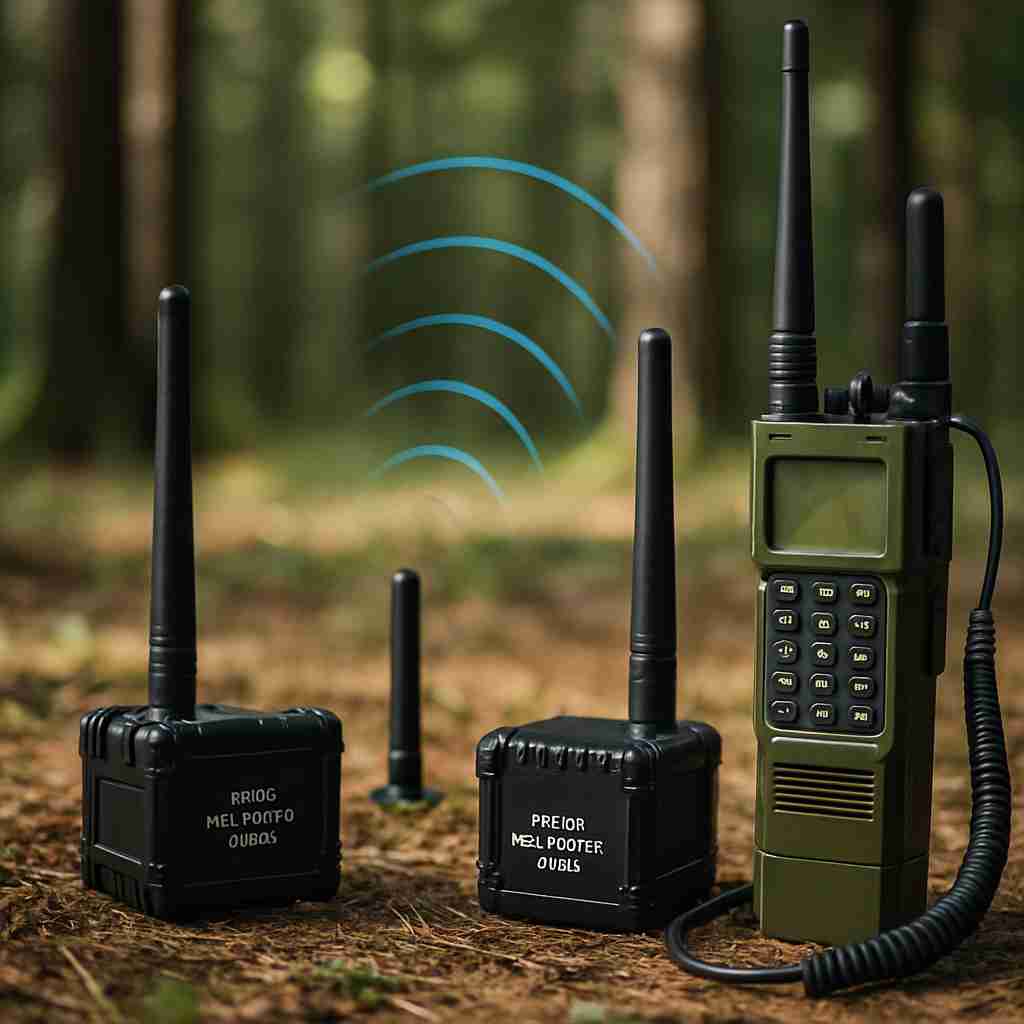
In communication technology, mesh network radios alongside mobile ad hoc networks (MANETs) are transforming the way connections are maintained, particularly in standalone communication devices and military communication systems. These innovative methods deliver resilient and flexible frameworks that guarantee connectivity even when traditional infrastructures fail, which is especially critical in isolated regions where conventional networking options fall short.
Understanding Mesh Network Radios
Within distributed communication, Mesh Network Radios are transforming connectivity across urban and isolated locations alike. These devices move away from conventional networks that depend on a central node to direct traffic, instead employing a mesh wireless network where each node enhances the system’s collective performance. This non-centralized wireless system fosters resilience and dependability, dynamically adapting as conditions within the network shift.
In mesh network radios, transmission leverages intelligent routing protocols that enable data to pass from one node to another until reaching its target. Such adaptability allows the network to reorganize itself instantly if a node drops out or new nodes appear, sustaining a solid connection without manual input. The advantages of this method become especially clear in rough, unpredictable landscapes where permanent infrastructure might be impractical or prone to failure.
The flexibility of these radios provides a notable advantage in places like rural communities and military communication systems. In areas with limited or no telecommunication infrastructure, scalable mesh network infrastructures offer an economical way to link remote spots. By utilizing locally situated nodes, these systems weave a broad fabric of connectivity that grows naturally in response to demand.
Technological improvements in mesh network radios recently concentrate on boosting range, throughput, and power-saving capabilities. Contemporary models incorporate sophisticated algorithms that optimize energy usage, extending battery life during field operations. Moreover, protected wireless mesh radio designs implement robust encryption protocols that address rising security concerns, making them ideal for sensitive operational communication systems.
In defense communication infrastructure, Mesh Network Radios provide unmatched benefits. Emergency response and military teams depend on them to sustain strong communication channels in challenging environments. For example, following disasters when typical networks fail, resilient mesh radios for disaster situations empower first responders to coordinate efficiently, ensuring fast and accurate communication.
Additionally, integrating GPS tracking with mesh network communication further enhances the effectiveness of these radios in tactical contexts. They deliver vital location information, improving situational awareness and teamwork in the field. As the need for robust and flexible communication grows, adaptive mesh network solutions continue evolving to meet the demands of diverse, changing scenarios.
Ultimately, mesh network radios signify a major evolution in wireless communication concepts. By adopting a distributed, self-adjusting communication approach, these radios are extending their applicability across a wide spectrum — from connecting rural communities to supporting advanced military communications.
Introduction to Mobile Ad Hoc Networks
Mobile Ad Hoc Networks (MANETs) represent a groundbreaking evolution in how wireless communication is perceived and employed. Their defining characteristic is decentralization. Rather than depending on fixed infrastructures such as base stations or cell towers, MANETs enable individual nodes—like mobile devices or computers—to spontaneously establish a network among themselves. This creates exceptional adaptability, especially in situations where conventional communication frameworks are damaged or entirely absent.
Operational Principles of MANETs
The core of MANETs lies in their self-sufficient design. Every node functions simultaneously as a host and a router, allowing it to both send its own data and forward packets for other nodes. The true strength of this model is the network’s capacity for self-organization and adjustment to changes in the environment. Whether a node disappears or a new device enters, MANETs automatically restructure to ensure uninterrupted communication without relying on a central controller.
The routing protocols used in MANETs are equally impressive. They incorporate routing algorithms tailored to operate efficiently within mobile, ever-changing network topologies. For example, proactive protocols consistently update route information, while reactive protocols establish paths only when necessary, conserving resources and boosting efficiency according to current demands.
Benefits of MANETs
The advantages of these networks are particularly vital in critical sectors. MANETs serve as resilient, on-demand communication platforms in disaster response scenarios where traditional systems might fail. By enabling first responders to stay connected in real time, the coordination of relief efforts becomes more organized and effective. Likewise, in military communication systems, the integration of advanced encryption and security protocols guarantees secure and reliable functionality even in hostile conditions.
In civilian contexts, Mesh Network Radios support a variety of uses. Urban areas benefit from MANETs through public safety networks or temporary surveillance deployments. Conversely, they close connectivity gaps in rural settings, fostering communication where it might otherwise be limited or unavailable.
Current Technologies and Applications
Presently, numerous technologies showcase the strength and adaptability of MANETs. Among these, Mesh Network Radios stand as essential instruments. These devices effectively deploy mesh topology to guarantee smooth and efficient data transmission across the network. Innovations such as smart traffic systems in cities rely on MANETs to collect real-time data and optimize traffic flow, which helps diminish congestion and environmental impact.
In rural and isolated locations, community-driven initiatives leverage MANETs to set up mesh networks that enable internet access for underserved populations. These networks facilitate communication and bolster educational and economic growth, bridging the digital divide.
Advanced uses extend to automated and connected vehicles, where MANETs promise a future of intercommunicating cars improving safety and efficiency. In farming, MANETs support precision agriculture wireless technology by providing real-time sensor monitoring and data collection, enhancing crop yields and resource management.
In conclusion, Mobile Ad Hoc Networks offer a transformative approach to wireless communication. Their decentralized and adaptable nature unlocks countless possibilities, empowering vital and everyday applications alike across varied settings. As technology progresses, the reach and uses of MANETs are expected to broaden, delivering increasingly innovative wireless connectivity solutions.
Mesh Networking Solutions for Off-Grid Communication
Mesh networking solutions deliver exceptional advantages for autonomous communication solutions, utilizing interconnected nodes to guarantee uninterrupted connectivity without depending on conventional infrastructure. These cutting-edge systems overcome numerous obstacles, offering internet access where traditional methods might prove inadequate. Thanks to their adaptability and durability, mesh wireless networks have become essential in a range of contexts, from community wireless mesh projects to emergency response communication infrastructure.
A powerful example showcasing mesh networking is the rise of community-driven mesh networking programs. In locations suffering from unreliable internet service, grassroots initiatives have surfaced to establish networks based on mesh technology. Volunteers often position nodes within residences, educational institutions, and businesses, weaving together a resilient connectivity web. This framework enables communities to surmount geographic constraints, close the digital gap, and stimulate local economic growth. Access to information, learning opportunities, and remote healthcare services once unattainable becomes readily available to residents. These endeavors highlight the empowering potential of mesh technology as a driver for social advancement.
Within disaster response communication systems, mesh networks have literally saved lives. Natural catastrophes frequently damage terrestrial setups like cellular towers and fiber optic cables. However, wireless mesh communication devices for emergency response offer an excellent solution for establishing swift and dependable communication links. Emergency personnel can rapidly deploy portable nodes that form a network within minutes, easing coordination and information exchange among first responders. Such interoperability is critical to efficient relief management, often tipping the scales between life and death amid chaos.
Furthermore, mesh networks prove vital in isolated regions where infrastructure is minimal. Traditional networking in challenging landscapes such as mountain ranges or thick forests tends to be cost-prohibitive and technically demanding. Responsive mesh communication solutions enable adaptable coverage, reaching areas that might otherwise stay offline. For economies relying heavily on farming or tourism, this connectivity revolutionizes productivity—farmers can obtain real-time market intelligence, while tourists maintain links to the outside world, thereby fostering regional progress.
Nonetheless, these networks are not restricted to rural or emergency contexts alone. Within urban environments, smart city mesh technology is increasingly integrated into infrastructure planning. Cities utilize this advanced mesh networks for smart cities to optimize resource management—from power grids to traffic flow. The interconnected nodes of these wireless mesh communication networks provide the backbone for a metropolis where devices and information exchange seamlessly, enhancing everything from street illumination to waste disposal. Such uses demonstrate the flexibility and innovation that mesh wireless systems bring to improving urban life.
Security remains a top priority for mesh network systems, particularly within standalone communication devices. Robust mesh network security solutions, including encryption and safeguarded protocols, maintain data privacy and integrity against cyber threats. Innovations like Mesh Network Radios have enhanced user verification and network robustness, ensuring communications remain protected and reliable even in disconnected settings.
To sum up, mesh networking solutions for autonomous communication solutions are proving to be adaptable, effective, and essential. By unlocking connectivity in places hindered by geographic, economic, or technical issues, they pave the way toward more inclusive access to information and communication technologies. From local mesh network initiatives to emergency response communication infrastructure, mesh wireless networks exemplify practical ingenuity, underscoring their critical role in our increasingly connected society.
Tactical Mesh Radios: A Military Perspective
Tactical mesh radios play a crucial role in modern defense communication systems, delivering the flexibility, durability, and security required for missions in challenging settings. Built to endure the hardships of combat scenarios, these devices offer troops a secure and efficient way to maintain contact even when standard infrastructure fails. By harnessing cutting-edge technologies, these radios enable smooth and dependable communication over diverse and frequently hostile landscapes.
Central to tactical mesh radios is their ability to form distributed wireless networks that self-heal. Unlike traditional radio setups depending on fixed infrastructures, these scalable mesh network infrastructures adjust in real-time, ensuring uninterrupted connectivity even if some nodes are taken out or disabled. This dynamic capability proves essential in military operations where the terrain and mission demands are continually evolving. The option to automatically reconfigure guarantees communication channels stay operational and effective amidst unpredictable challenges.
A fundamental necessity for these radios is protected wireless mesh radio communication. Since military transmissions are highly confidential, safeguarding data against interception and hostile threats is critical. These systems employ advanced encryption protocols following standards such as the Joint Tactical Radio System (JTRS). By establishing interoperability and security benchmarks across military branches, JTRS ensures that communication platforms can seamlessly and securely integrate across various operational theaters. Beyond voice communication, these radios also support data exchange, allowing swift sharing of key information like maps, coordinates, and mission orders with very low delay.
Rapid deployment capability is another hallmark of tactical mesh radios. Because military engagements demand fast reaction times, quickly setting up communication infrastructure is vital. These radios are optimized for expedited deployment communication platforms, enabling forces to promptly establish reliable networks soon after reaching an operational site. Such systems empower command and control units to effectively manage and coordinate dispersed teams during mission-critical activities.
Moreover, these tactical mesh radios are engineered for ruggedness. They withstand severe weather, electromagnetic disruptions, and physical impacts to maintain peak performance in settings where other communication devices may falter. The robust field radios combine sturdy construction with advanced technology integration to meet the stringent standards military applications require, ensuring consistent functionality under the intense pressures of combat.
In conclusion, Mesh Network Radios (one) remain foundational to contemporary military communications strategies. Their provision of secure, reliable, and adaptable communication platforms is essential for maintaining effective command and coordination in military operations. By supporting encrypted defense messaging and rapid setup communication infrastructures, these radios improve operational success and protect mission-critical data, proving indispensable in today’s complex and evolving defense communication landscape. Looking forward, ongoing advancements will continue to influence military communications, driving innovations that address the dynamic demands of modern warfare while integrating seamlessly with broader Mesh Network Radios (two) ecosystems and upcoming technological progress.
The Future of Wireless Mesh Networks
At the cutting edge of connectivity innovation are wireless mesh systems, which integrate effortlessly with smart grid systems and broaden the scope of the Internet of Things (IoT). As technology marches forward, these mesh networking solutions hold transformative possibilities across numerous industries. Promising enhancements in bandwidth capacity are evident in current trends, boosting data transmission speeds essential for demanding applications. Their synergy with emerging 5G infrastructure further amplifies their significance, delivering unmatched speed while supporting a rapidly increasing number of connected devices with enhanced reliability.
Enhancements in security protocols are also paramount for Mesh Network Radios. Amid rising cyber threats, wireless mesh communication networks are adopting robust encryption methods to safeguard sensitive data, positioning themselves as dependable options for both private and enterprise use. Preserving data privacy and integrity is vital, especially in domains where security is critical.
The role of 5G integration is especially notable. It not only elevates mesh network efficiency but also unlocks their full potential in smart cities. This partnership enables superior data management and more responsive services, ensuring that urban populations enjoy real-time solutions and improved municipal oversight. As these technologies weave into the broader digital ecosystem, they accelerate advances in automated homes, connected automobiles, and other IoT-driven breakthroughs.
Despite these encouraging strides, wireless mesh communication networks encounter issues like interference and energy consumption. Interference, commonly caused by crowded frequency bands, can hinder communication channels and degrade network performance. Innovations such as adaptive frequency selection systems and enhanced beamforming techniques are being developed to precisely target signals and reduce outside interference. Energy usage is another challenge, especially given the growing number of connected endpoints. Progress in power-efficient wireless mesh networks and hardware design is critical to extending battery life and minimizing environmental impact.
The adaptability and scalability of these networks are also key to their future. They must smoothly scale up or down according to demand without sacrificing performance. Advances in flexible mesh network platforms and software-defined networking are making such seamless user experiences possible regardless of network size.
Additionally, artificial intelligence for wireless mesh networking is becoming increasingly influential. AI-powered analytics predict network traffic and optimize routing and resource allocation on the fly. This intelligent oversight enhances user interaction and maximizes bandwidth utilization, marking a vital milestone in the development of mesh networks.
Ultimately, wireless mesh communication networks have a horizon filled with promise. With continuous innovation and a focused effort to address current obstacles, they remain a cornerstone technology for modern communication. Their integration into fields like energy management, healthcare, and urban planning suggests that Mesh Network Radios will be fundamental components in the digital landscape of future societies.
Conclusions
Mesh network technologies, including both mobile ad hoc networks and military communication systems, provide unmatched flexibility and dependability across various settings. As these adaptive mesh network solutions advance, they steadily broaden connectivity in regions usually neglected by traditional communication infrastructures. By grasping their foundational concepts and practical uses, individuals can utilize these innovations to overcome connectivity obstacles today and in the future.