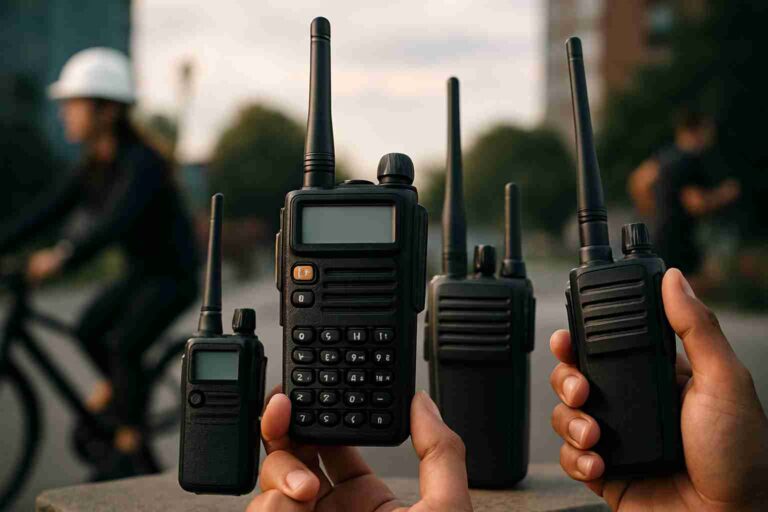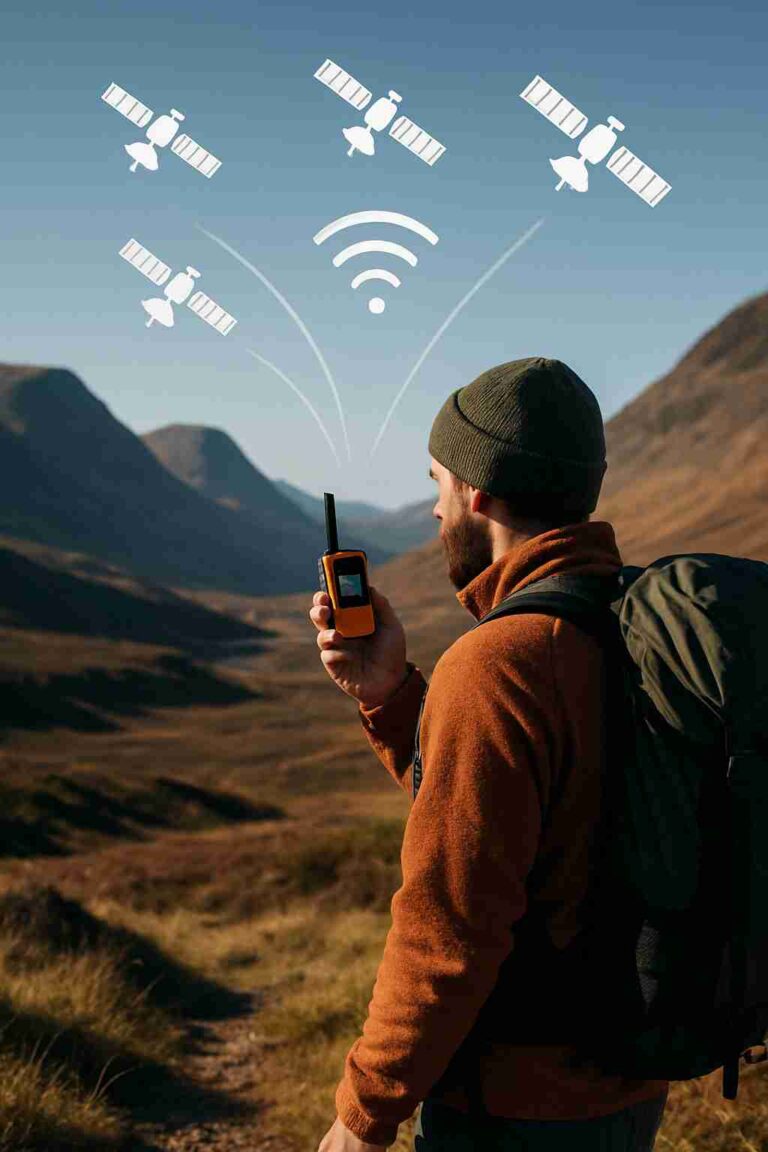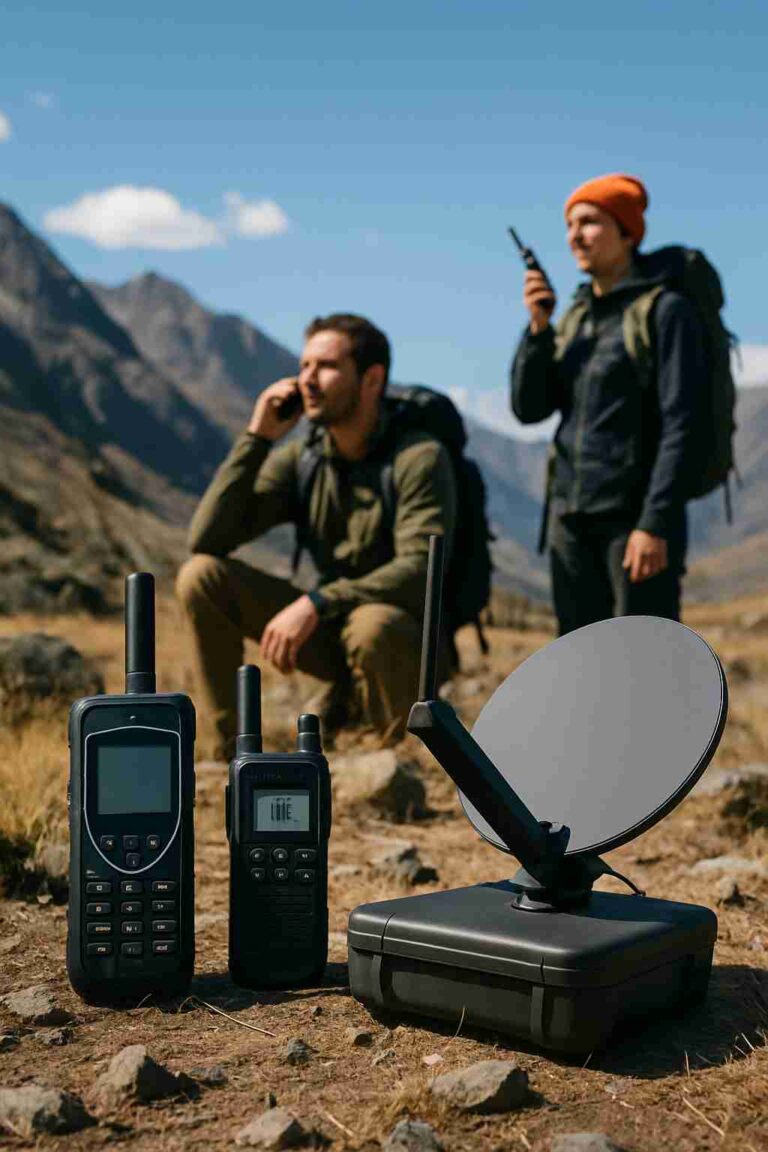
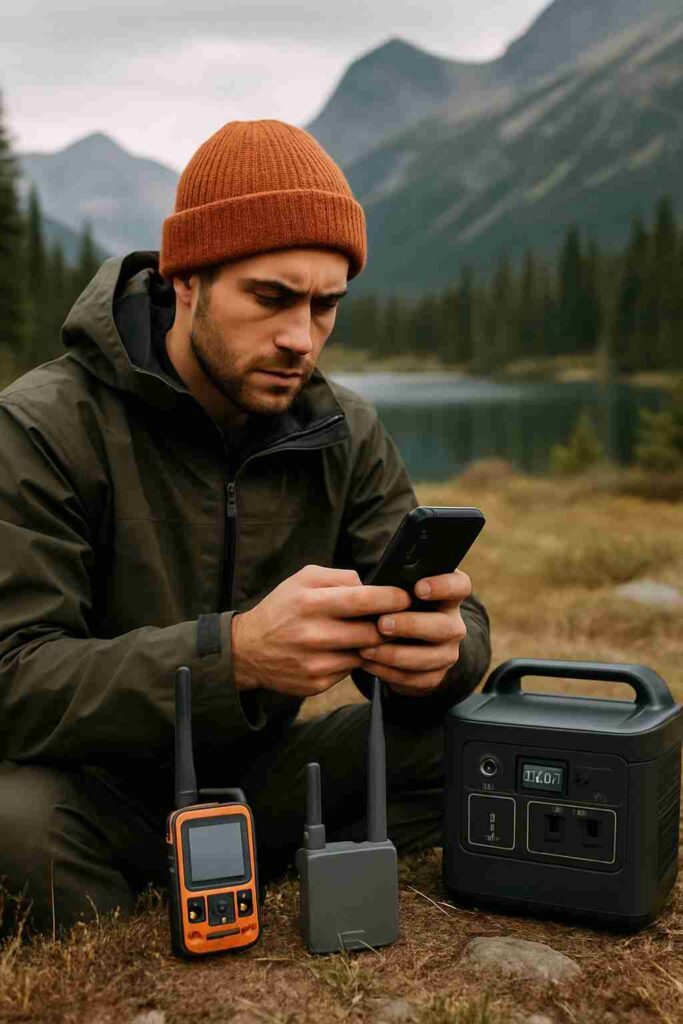
Independent communication systems are vital technologies that enable connectivity in isolated regions beyond standard network coverage. This piece explores various standalone communication solutions, including satellite-based messaging terminals, LoRa mesh communication systems, durable outdoor mobile phones, and mobile energy systems, all designed to guarantee dependable communication in the toughest conditions.
Understanding Off-Grid Communication Devices
When conventional networks fail to reach, remote communication devices become indispensable for maintaining connections. For those journeying into untamed territories, isolated professionals, and emergency teams tackling demanding conditions, these autonomous communication solutions prove vital. To grasp how connectivity is achievable anywhere and anytime, let’s explore the realm of off-grid communication in depth.
Designed to operate independently of cellular coverage and internet infrastructure, standalone communication systems harness specialized technologies crafted to circumvent traditional networks. This ensures they remain functional even in the most secluded and rugged environments, from expansive rural landscapes to high-altitude mountain ranges and thick woodlands.
The significance of self-sufficient communication technology is profound. In critical moments where staying linked can be crucial, these devices guarantee you’re never completely disconnected. For explorers, hikers, and backpackers, keeping communication channels open not only boosts safety but also reassurance. Likewise, for remote-area professionals—like field researchers or nature photographers—having dependable communication methods is priceless.
Key capabilities of these autonomous communication tools encompass message transmission and reception, precise location tracking, and in some instances, real-time interaction. Satellite communication devices, LoRa mesh connectivity technology, and other pioneering innovations lead the charge in delivering these features.
Particularly remarkable are satellite communication terminals, which utilize satellite constellations to send texts or emergency alerts almost anywhere on Earth. Whether ascending a distant summit or adrift at sea, these devices make assistance just a message away. Often integrated with GPS tracking off-grid devices, users can share exact whereabouts, a feature crucial during rescue missions.
Another compelling technology is the LoRa mesh communication system. This approach builds a network using low-power, long-distance radio waves, enabling devices within range to communicate without internet reliance. Ideal for localized group coordination in remote settings, this system helps teams stay connected even absent cellular signals.
Beyond safety and connectivity, these remote communication systems offer adaptability and versatility. For adventurers, they link you with the outside world for planning, hazard avoidance, or keeping family updated. Remote workers continue collaborating and accessing essential info when off the grid. Emergency services depend on these tools to orchestrate rescues, communicate swiftly within teams, and protect civilians during critical incidents.
For those seeking an in-depth exploration of such equipment, the best off grid communication devices review provides valuable insights to support informed choices.
The strategic incorporation of these technologies ushers in a new age where communication gaps shrink. Whether via satellites orbiting Earth or radio frequency networks weaving devices together, standalone communication solutions redefine staying connected in today’s world. They symbolize cutting-edge innovation and dependability, ensuring that wherever you find yourself, reaching the wider world remains effortless.
Next, we will examine satellite communication terminals more closely. Focusing on popular devices such as the SPOT Satellite Messenger and Garmin inReach, we’ll highlight the multifunctional, durable qualities that make them exemplary solutions for effective off-grid communications.
Satellite Messengers: Staying Connected Globally
In the constantly advancing domain of standalone communication solutions, satellite messengers prove essential for anyone traveling outside conventional network coverage. When regular cellular reception drops, these satellite communication devices provide a reliable means to send and receive messages securely from anywhere on Earth. For explorers, off-site professionals, or those braving the unpredictability of the wilderness, satellite messengers offer reassurance as expansive as the landscapes they traverse.
Leading the charge in this segment, the SPOT Satellite Messenger along with Garmin’s inReach lineup showcase the powerful functions of these satellite-based messaging terminals. Let us delve into how these gadgets operate and what renders them indispensable for remote communications.
**SPOT Satellite Messenger**
Tailored for dedicated explorers, the SPOT Satellite Messenger utilizes the Globalstar satellite communication tool features through the Globalstar satellite network. It enables users to dispatch preset messages and GPS locations to designated email addresses or phone numbers. This capability is crucial for updating loved ones about one’s location, especially where mobile networks falter.
Among its notable capabilities are real-time location updates, which refresh periodically on a shared map, offering peace of mind to family and friends. The device also incorporates an SOS satellite communication unit, a vital component that sends an emergency alert to a 24/7 global response hub. This function is indispensable during urgent incidents such as hiking mishaps or unexpected environmental occurrences.
Beyond its main features, the SPOT device is built ruggedly and designed for ease of use, capable of enduring harsh conditions. Its compact form factor combined with long battery endurance makes it a trustworthy travel companion for prolonged adventures.
**Garmin inReach**
Elevating satellite communication, Garmin inReach offers two-way messaging via the Iridium satellite communication terminal, which blankets the globe with connectivity. Whether you’re sending a status update or obtaining weather forecasts, inReach facilitates smooth communications irrespective of where you are located.
Recognized for its multifunctionality, Garmin inReach integrates a GPS receiver for precise navigation and monitoring, indispensable when journeying through unfamiliar environments. It also features an interactive satellite-based SOS alert system, enabling users not just to transmit a distress call but to actively communicate with rescue coordination teams for situation updates.
Garmin’s intuitive interface pairs with smartphones through the Earthmate app, enhancing usability by providing access to detailed topographical maps and NOAA charts. This blend of functionalities makes the Garmin inReach a favored choice among outdoor enthusiasts and professionals operating in isolated regions.
**Practical Applications**
In an environment where nature sets the terms, satellite messaging equipment empower individuals to take charge of their security and remain connected. These devices prove particularly valuable for:
– **Adventurers**: Whether hiking, climbing, or sailing, satellite communication devices ensure that even the most remote areas remain within communicative reach.
– **Remote Workers**: Specialists in geology, environmental studies, and archaeology rely on satellite communication terminals to transmit data and stay linked with headquarters without depending on conventional networks.
– **Emergency Scenarios**: In disaster-prone zones, satellite messengers offer critical communication channels when local infrastructure is compromised.
Ultimately, when reviewing the best off grid communication devices review, satellite messengers consistently appear among the top options. Their dependable global connectivity paired with GPS monitoring and SOS capabilities make them essential tools for safeguarding users and keeping them connected in the toughest settings. This fusion of technology and practicality lets adventurers explore boldly, confident that support is always within reach.
LoRa Mesh Networks: Expanding Communication Range
Picture yourself deep within the mountains, far beyond the reach of conventional communication signals, yet still able to exchange vital information with teammates spread across miles. This is exactly what LoRa mesh communication system offers—a groundbreaking technology that stretches communication reach over great distances while using very little energy. Whether embarking on a bold expedition or responding after a natural calamity, LoRa’s distinctive features guarantee connectivity regardless of the environment.
LoRa, an abbreviation for Long Range, employs chirp spread spectrum modulation which enables data transmission across extensive distances with minimal interference. This capability makes it perfect for isolated settings where standard cellular networks prove unreliable. Utilizing low-frequency radio waves, LoRa achieves connections over multiple kilometers, even passing through thick forests or mountainous terrain. Impressively, it manages all this with low power consumption, thereby extending battery life—an essential factor for autonomous communication equipment.
A major asset of LoRa networks lies in their capacity to create decentralized mesh systems. Such a network comprises linked nodes, permitting data to jump node-to-node until it arrives at its endpoint. This distributed framework means that if one node fails or drifts out of range, communication is rerouted seamlessly, maintaining uninterrupted connectivity. The outcome is a resilient and adaptable network tailored to the demanding conditions often faced in far-flung locations.
Prominent examples of LoRa mesh communication system deployments include open-source platforms like Meshtastic. Meshtastic excels in transforming simple hardware into potent communication instruments. By pairing cost-effective LoRa components with open-source software, users can build bespoke networks tailored to their unique requirements. The practicality of Meshtastic and comparable tools has been validated across diverse applications.
During disaster response scenarios, where infrastructure may be damaged or destroyed, LoRa networks serve as an indispensable link. Rescue teams rely on these networks to coordinate activities, exchange critical information, and sustain communication amid chaotic conditions. Moreover, adventurers engaged in remote exploration—whether for research, thrill, or discovery—benefit from the assurance LoRa networks provide by keeping them connected to base camps or fellow explorers.
While the best off grid communication devices review highlights standout models, it’s crucial to understand these technologies within their broader context. They embody a flexible strategy for maintaining connectivity in the less charted corners of our planet. Innovators and enthusiasts alike are continuously experimenting with antenna designs, alternative power sources, and node placements to maximize network efficiency and coverage.
As we adopt advanced communication methods more widely, the impact of LoRa mesh networking infrastructure extends beyond individual adventures. They open doors in IoT deployments, supporting smart farming initiatives that run autonomously and advancing wildlife conservation by enabling real-time monitoring of endangered species across vast landscapes. With continued innovation, systems like these are set to revolutionize how information is shared in the planet’s most remote regions.
To summarize, the transformative potential of LoRa mesh networks ensures that even the most isolated environments pose no barrier to efficient communication. By blending innovative technology with real-world applications, platforms such as Meshtastic showcase the future of durable, independent communication systems. For a deeper dive into these advancements, the best off grid communication devices review offers a thorough guide to the tools driving this remarkable evolution.
Rugged Smartphones: Durability Meets Smart Connectivity
In the realm of independent communication systems, rugged smartphones stand out as reliable champions, designed to maintain their performance even under the harshest conditions. These devices combine toughness with intelligent connectivity, tailored for adventurers, field workers, and construction crews who operate beyond the typical office environment. Unlike sleek and delicate models, rugged smartphones boast features such as dust and water resistance, sturdy construction, and extended battery endurance, allowing them to excel in demanding situations where others would fail.
Leading the charge in robust outdoor mobile devices is a focus on overcoming environmental hurdles. Many of these tough outdoor smartphones carry MIL-STD-810G certification, a military benchmark that tests their durability against extreme temperatures, shocks, vibrations, and moisture. This certification ensures dependable operation, whether on a construction site, jungle trek, or dusty pathway. A prime example is the CAT smartphone lineup, renowned for thriving in severe industrial settings and offering thermal camera mobile capabilities ideal for HVAC technicians or electrical inspectors.
Water and dust protection go beyond mere buzzwords; they represent vital specifications for those working in unpredictable or challenging climates. Series like Ulefone Armor, featuring IP68/IP69K ingress protection ratings, exemplify this ruggedness. These ratings confirm the devices’ capacity to endure extended immersion in water and airborne dust, keeping users connected whether navigating rain-drenched landscapes or dusty job sites without interruption.
Another key aspect in rugged smartphone design is battery longevity. In environments where power sources are scarce, these phones often provide substantial battery capacities—some surpassing 10,000mAh. This ensures continuous use for several days, whether on a prolonged hike or an overnight mountain rescue.
Despite their tough exterior, rugged smartphones don’t compromise on modern features. High-definition displays protected by scratch-resistant Gorilla Glass, programmable buttons that allow quick access to essential apps, and up-to-date Android operating systems all contribute to a smooth user experience. Many models integrate GPS, barometers, altimeters, and comprehensive outdoor toolkits, transforming these devices into indispensable tools for professionals and explorers alike.
Brands such as CAT, Ulefone, and Samsung’s Galaxy XCover line showcase how rugged smartphones marry resilience with cutting-edge technology, attracting not just industrial users but outdoor enthusiasts as well. Whether climbing, skiing, or conducting field surveys, these phones provide steady connectivity where traditional smartphones might falter.
The evolution and ongoing enhancement of rugged smartphones correspond closely with technological progress found in other standalone communication solutions, like the best off grid communication devices review which highlights specialized equipment tailored to unique demands. In scenarios where maintaining contact can mean the difference between success and peril, these robust mobile devices reveal their true value and secure their role as essential tools for effective communication.
Portable Power Stations: Energizing Off-Grid Ventures
In the field of remote communication devices, portable power stations have become essential allies, guaranteeing that our gadgets stay powered even when conventional electricity sources are unavailable. These compact energy devices hold particular importance for explorers venturing into isolated territories, as well as for those preparing for power disruptions closer to urban life.
Transportable power solutions, such as those created by EcoFlow and Bluetti, combine solar and battery innovations seamlessly to cater to the varied power demands of today’s independent communication systems. By supplying dependable energy anytime and anywhere, these stations greatly enhance the functionality of communication gadgets—whether smartphones, satellite communication terminals, or laptops. Let’s explore how these power stations serve a critical role in fueling off-grid expeditions.
Picture heading out into the wild armed with your smartphone, a vital tool for autonomous GPS location trackers and urgent communication systems for remote zones. Or maybe a satellite communication device, crucial for sending predefined messages when mobile networks fail. Without power, these communication lifelines are nothing more than inert metal and plastic. Portable power stations close this gap, transforming any place into a viable charging hub. They turn powerless situations into guaranteed operational time, thus maintaining connectivity when it matters most.
Take EcoFlow’s range, for example, known for its swift recharge capabilities and impressive power output. Devices like the EcoFlow Delta easily run multiple gadgets at once, courtesy of its AC sockets, USB-C connectors, and car outlet adapters. This flexibility keeps equipment like laptops and communication tools active, supporting everything from emergency email dispatches to satellite phone calls with distant teams.
Bluetti, conversely, is recognized for its portable, tough build ideal for harsh environments. Products such as the Bluetti AC200P act not only as power stations but as vital support systems, enabling standalone communication technology to operate over long stretches off-grid. Featuring solar charging facilities, these stations can recharge from abundant sunlight commonly found in remote locales, making them both sustainable and practical for extended outdoor journeys.
These advancements highlight the mutual dependence between mobile energy systems and remote communication devices. While the former supplies the critical power that energizes the latter, the dependability and lifespan of communication gadgets rely heavily on these dynamic, transportable power options.
Furthermore, in urban emergency scenarios where power failures interrupt everyday activities, portable power stations become indispensable backup power systems. They keep essential communication running smoothly, turning moments of uncertainty into manageable continuity. This technology not only attends to immediate demands but also boosts readiness for unexpected events.
One fact stands out: the ongoing innovation in portable power stations is reshaping our approach to communication tools in isolated and demanding environments. As these solutions progress, their vital role shines brighter, delivering unparalleled energy independence alongside communication functions. This crucial partnership, as detailed in the best off grid communication devices review, affirms the significance of these instruments, ensuring that connectivity remains reliable no matter the landscape or circumstance.
Conclusions
Independent communication systems are essential tools for maintaining connectivity where conventional networks fall short. Satellite communication terminals, LoRa mesh communication systems, durable outdoor mobile phones, and mobile energy systems all contribute critically to delivering dependable communication and power in isolated and demanding settings. Utilizing these advanced technologies allows users to stay connected to vital networks, enhance safety measures, and secure success in off-grid conditions.