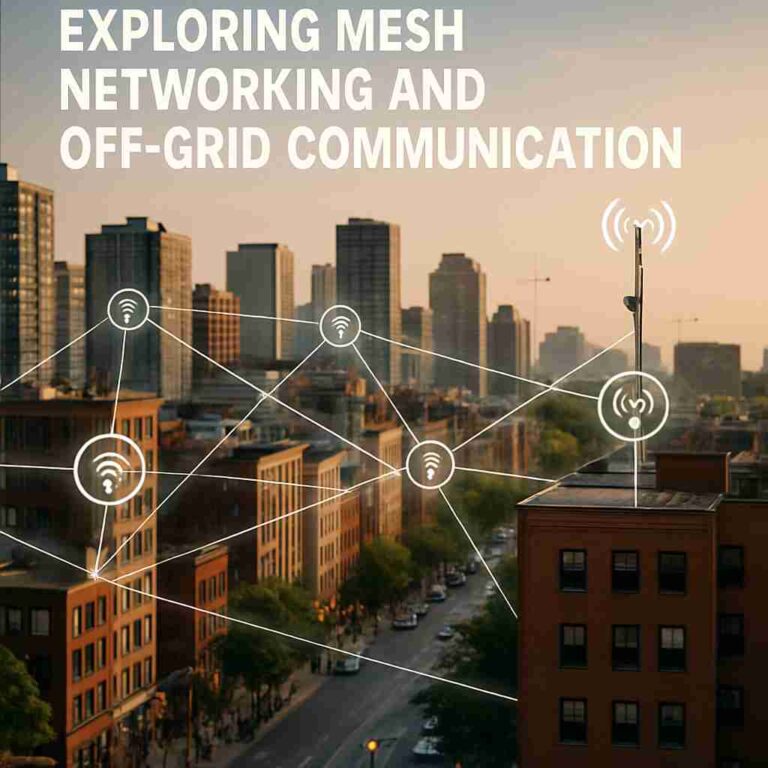

In today’s world of swift technological progress, having effective communication methods is essential for the Internet of Things (IoT). The LoRa mesh networking and LoRaWAN protocols, combined with Meshtastic and MeshCore platforms, are transforming energy-saving IoT communication. This article explores how these innovations contribute to expanding IoT device connectivity and the evolution of IoT networking in the future.
Understanding LoRa Mesh Networks
LoRa Mesh Networks mark a significant advancement in wireless communication, especially for IoT applications. Using a LoRa mesh network, devices exchange signals by passing them through several nodes. Each node functions as both a sender and receiver, providing mesh network resilience that remains strong even in difficult conditions. The mesh topology incorporated allows for flexible and efficient expansion of the network, making it ideal for distributed IoT deployments.
LoRa technology, known for its energy-efficient IoT communication, is perfectly suited for scenarios needing minimal power use, enabling devices to run for longer periods without frequent battery changes. This advantage is vital for remote setups like intelligent farming sensors or environmental monitoring equipment. Additionally, the LoRa mesh networks offer long-distance wireless communications that support data transmission over wide areas, which is crucial for urban infrastructure projects requiring dependable communication over large territories.
The flexibility and robustness of LoRa mesh networks underpin their effectiveness in various industries. From streamlining smart city operations to boosting precision agriculture systems, the scope of applications is extensive and diverse. As demand rises for interconnected devices, LoRa mesh networks will play an increasingly pivotal role, driving the evolution of IoT networking forward.
Diving into LoRaWAN
As the Internet of Things landscape continues to change, the significance of the LoRa mesh networking in communications is undergoing a major transformation. This technology, unlike earlier versions, enhances its mesh topology specifically for durability and efficiency, especially where resources are limited. The nodes within the network are interconnected, acting both as senders and receivers, which boosts signal dependability through built-in redundancy. Thanks to this flexibility, the network can autonomously reroute data if any node stops working, resulting in a highly dependable solution for IoT device networking.
The remarkable power efficiency of the LoRa mesh networking system enables it to support battery-powered IoT gadgets across wide distances due to its low-energy IoT data transmission capabilities. This makes it ideal for conditions where continuous connectivity is essential without frequent upkeep, including remote environmental monitoring or dispersed urban infrastructure.
Moreover, the adaptability of this mesh system enhances network capacity by extending coverage and improving device connectivity. In the agricultural sector, for example, farmers utilize this technology for remote field surveillance, collecting vital information on soil states and weather variations without physical intervention. At the same time, urban planners adopt it to optimize city management, boosting efficiency through smart solutions such as waste collection and lighting systems. Consequently, LoRa mesh networks have become a critical component of smart ecosystem solutions.
The Role of Meshtastic and MeshCore
Meshtastic and MeshCore have transformed mesh networking by removing dependence on traditional internet systems. These open-source frameworks utilize the flexibility of the Lora mesh network, supporting distributed communication systems that are resilient and decentralized. Especially suited for outdoor enthusiasts and critical communication scenarios, Meshtastic excels at creating networks for such uses. Leveraging LoRa mesh networking, it allows users to build communication channels that cover large outdoor areas without relying on cellular or satellite links. This functionality proves invaluable in isolated locations, providing smooth communication even where networks fail. On the other hand, MeshCore takes this a step further by offering structured paths within communications to boost mesh network stability. Such an approach is vital for settings that depend on steady message delivery. Together, these environments enable users to build self-sufficient networks, democratizing access to communication on a worldwide scale. By circumventing the limits of standard internet, Meshtastic and MeshCore mark a significant advance in overcoming connectivity hurdles. As their usage expands, these technologies hold the promise to bridge communication gaps, making essential connections more widely reachable. Consequently, the potential of the Lora mesh network continues to evolve, bringing innovative IoT connectivity platforms to the forefront.
Low-Power Wide-Area Networks and Their Importance
Within the sphere of Internet of Things communication, the Lora mesh network stands out as a game-changing innovation. Utilizing the strengths of energy-efficient IoT communication combined with broad-coverage wireless networks, these systems form durable and autonomous communication links. Unlike traditional centralized setups, a Lora mesh network boosts coverage and dependability by enabling every node to serve as a relay point. This distributed communication system guarantees continuous data transfer, even if certain nodes face disruptions.
What sets these networks apart is their capacity to function on very low energy consumption, making them especially suited for remote or challenging environments where power availability is limited. Agriculture benefits from their use through intelligent farming sensors that track soil health over vast fields, while metropolitan areas leverage them for smart city IoT systems like parking management and waste control.
These networks emphasize more than just range extension; they cultivate robust connectivity in IoT communication platforms. Their versatility across diverse landscapes and straightforward deployment make them essential for progressing smart cities and sustainable ecosystems, promising an encouraging outlook for the evolution of IoT networking.
The Future of IoT Communication
As the Internet of Things (IoT) continues its evolution, LoRa mesh networking is becoming a pivotal force in enabling advanced communication frameworks. Instead of relying on centralized infrastructure, these networks utilize distributed communication systems to maintain strong connections. This adaptive network fault tolerance technology is vital for creating resilient infrastructures, especially in environments where usual connectivity might fail. In the realm of future smart infrastructures, LoRa mesh networking will likely transform the way connected devices exchange data. Their capacity to operate over broad-coverage wireless networks makes them exceptionally suited for expansive outdoor settings or large indoor facilities, smoothly adjusting to evolving network layouts. To keep pace, regulations must evolve to address spectrum allocation and data protection concerns. Challenges in merging them with other Internet of Things connectivity platforms may arise, yet their low-energy IoT data transmission and scalability promise considerable advantages over time. As sectors aim to broaden IoT device networking, prioritizing interoperability and adopting cutting-edge innovations will be essential. Doing so will foster seamless integration and cultivate an ecosystem where LoRa mesh networking can flourish, delivering smarter and more efficient Internet of Things connectivity services.
Conclusions
At the forefront of energy-efficient IoT connectivity, LoRaWAN and LoRa mesh networking offer adaptable and power-efficient communication options. As the MeshCore system and Meshtastic platform development advance, they hold the potential to improve accessibility and decentralization within distributed communication systems. Utilizing the advantages of LPWAN technology, these breakthroughs are shaping the path toward more sustainable and broadly available connectivity across multiple sectors.