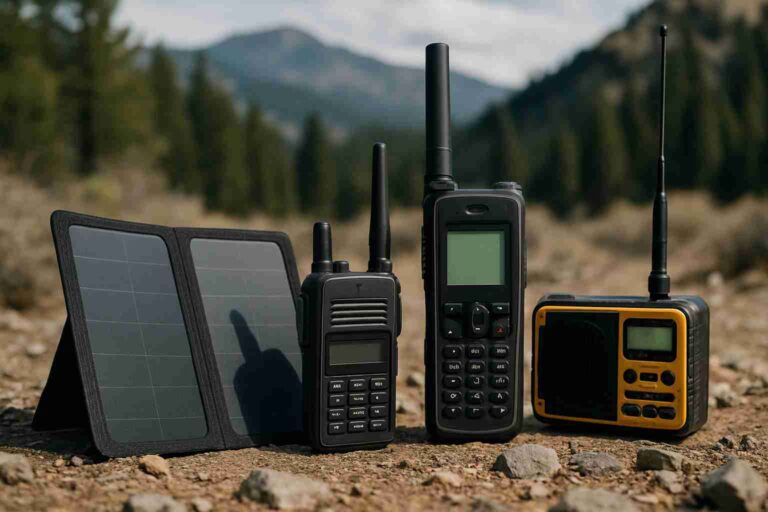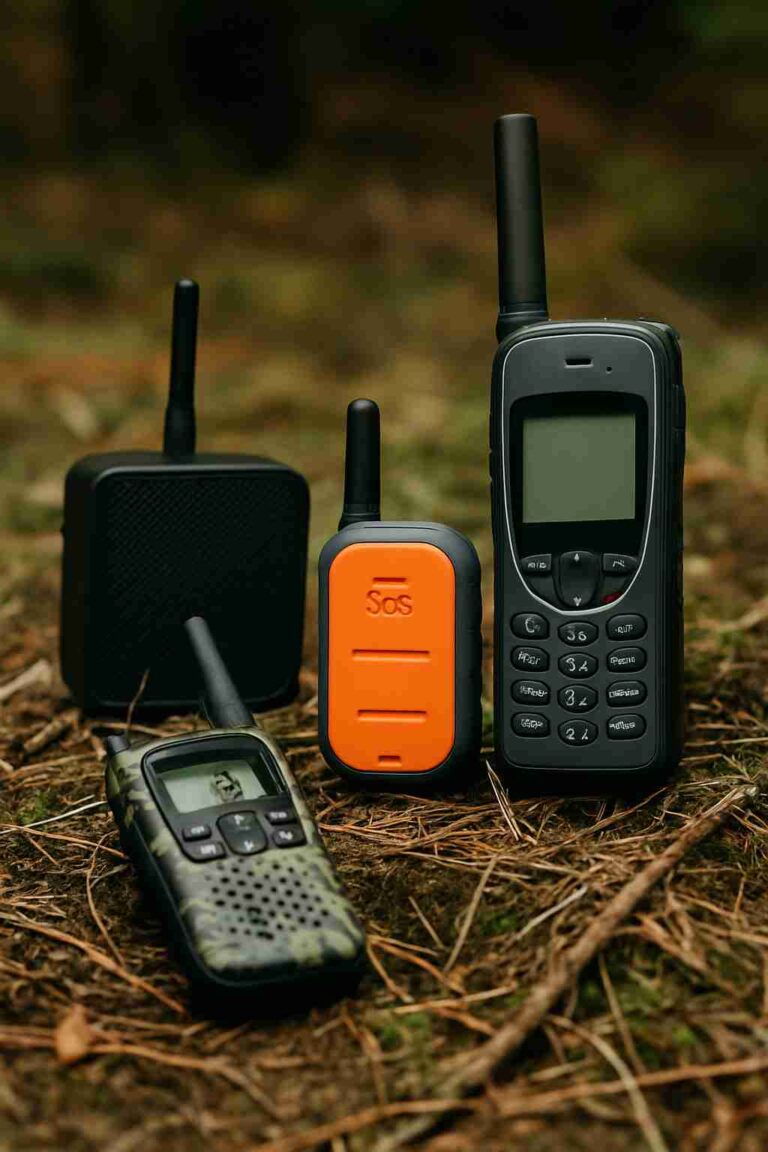
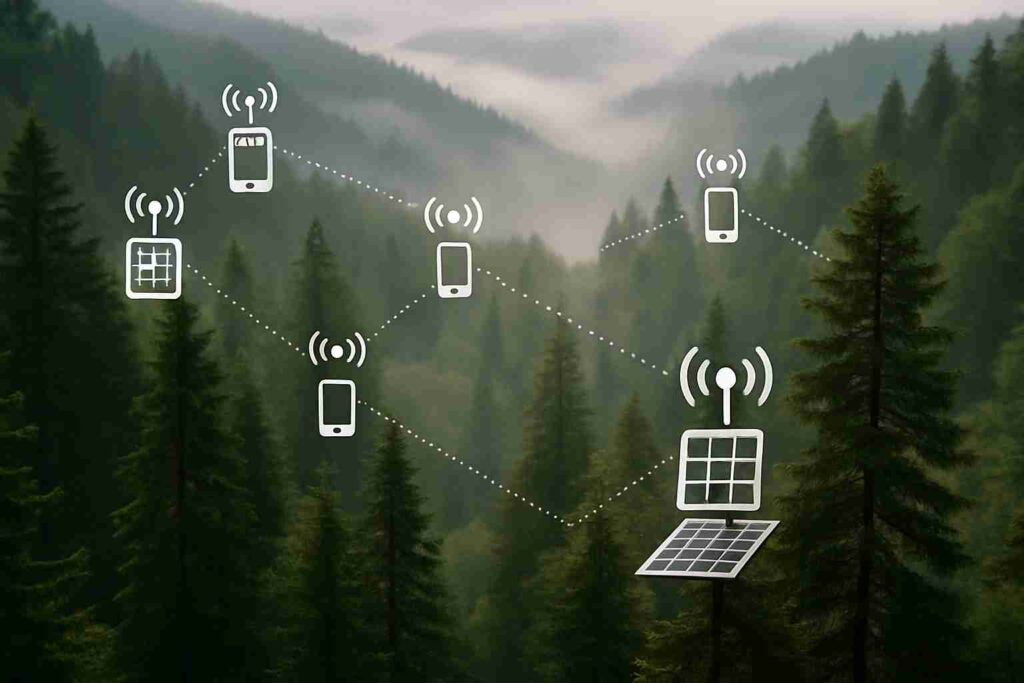
Meshtastic utilizes LoRa mesh communication to build vast mesh networks, making autonomous communication equipment possible even in the most isolated regions. These networks provide decentralized communication frameworks through direct node-to-node communication technology, employing low-power meshtastic gadgets to achieve extended range mesh communication. Explore how Meshtastic and LoRa network technology work, their practical uses, and the transformative influence they bring to communication.
Understanding Meshtastic and LoRa
Within the communication sphere, where conventional connectivity often struggles, the Meshtastic System stands out as a pioneering innovation. It harnesses LoRa technology’s power to transform how connections are made in distant locations. The fundamental advantage of the Meshtastic System is its capacity to create strong, long-distance links without relying on cellular services or internet access. This technology integrates flawlessly with current gadgets, allowing users to transmit and receive messages across expansive ranges with impressive efficiency.
What distinguishes Meshtastic is its employment of LoRa, or Long Range radio technology, designed for low-energy wide-area communication networks. LoRa forms the structural foundation for Meshtastic’s broad-range mesh networking, enabling devices to communicate over multiple kilometers even when traditional infrastructure is unavailable. This feature makes it an essential instrument for people and communities in isolated regions or areas where disasters have impaired the usual communication channels.
Meshtastic’s practical uses reach well beyond just theoretical concepts. In disaster-affected zones, where infrastructure might be compromised or overwhelmed, those using Meshtastic can stay connected via simple handheld gadgets that link into this mesh communication architecture. Likewise, outdoor adventurers, campers, and hikers find it vital for maintaining contact where mobile networks are absent. This technology supports peer-to-peer communication technology, weaving a resilient and self-sufficient communication web.
Meshtastic profoundly influences autonomous communication technology. By offering an alternative to established networks, it grants users unprecedented independence and trustworthiness. Whether for urgent messaging solutions, wilderness excursions, or rural populations searching for affordable communication options, Meshtastic instills security and accessibility. Its adaptability to evolving conditions alongside minimal power usage makes it an ecologically sound choice for enduring deployment in remote environments.
This fusion marks a transformative change in our understanding of connectivity, where lacking standard infrastructure no longer means communication blackouts. Instead, platforms like Meshtastic continuously expand, fueled by the aspiration to connect individuals irrespective of location. Utilizing the benefits of LoRa technology, Meshtastic demonstrates that vast terrains need not block the exchange of information, ushering in a new chapter of decentralized and democratized communication.
The Structure and Functionality of Mesh Networks
Delving into the complex framework of mesh networks, especially wireless mesh networking frameworks (WMNs), uncovers a sophisticated design crafted for uninterrupted communication. In these systems, nodes — including bridges and switches — dynamically form to relay signals efficiently. This setup creates a decentralized and sturdy communication framework that proves essential in isolated regions where conventional connectivity options are scarce.
At the heart of these networks, every node functions dually as a transmitter and receiver, allowing signals to pass from one node to another until they arrive at their intended endpoint. Such peer network communication solutions guarantee the network’s continuity even if a node falters, as data reroutes via alternative paths. This characteristic is vital in mountainous or forested areas where geographical barriers hinder direct links.
A standout feature of wireless mesh system architecture is its autonomous recovery ability. Nodes self-manage their connections to optimize routing, minimizing reliance on any single point and thus boosting overall resilience. This flexibility permits the network to grow effortlessly since new nodes can be added smoothly without demanding complex adjustments.
The significance of LoRa, a key component in these networks, is undeniable. LoRa technology employs sub-gigahertz radio frequencies that facilitate broad-range mesh networking with minimal power consumption. This capability is especially important in regions with limited energy resources where conserving battery life is critical. By harnessing LoRa, mesh networks enhance their coverage well beyond traditional wireless systems, enabling communication in communities otherwise left disconnected.
Thanks to LoRa’s power efficiency, nodes within a Meshtastic System can run on small batteries for long durations, an essential advantage when deploying networks in remote or autonomous communication environments. This low-energy demand aligns seamlessly with modern sustainability objectives, supporting ecological and economic advantages.
Moreover, LoRa accommodates multiple modes of data transmission, ranging from simple text to GPS information, making it an adaptable tool for various uses. It facilitates real-time tracking and communication across vast terrains, providing critical communication technologies during crises or wilderness expeditions.
LoRa’s interoperability within the Meshtastic System expands its usefulness beyond messaging. It acts as a backbone for IoT device connectivity in underserved zones, coordinating data flow among sensors distributed across extensive areas. This capability revolutionizes remote monitoring and resource management — from advanced agricultural systems to conservation efforts — demonstrating the breadth and flexibility of these networks.
Ultimately, wireless mesh networks empowered by LoRa technology transform strategies for remote communication. By combining energy-efficient long-distance communication with dynamic routing and broad coverage, they unlock new avenues for decentralized and standalone communication technology. This fusion of innovative network design and cutting-edge technology not only facilitates effective communication in Earth’s most isolated regions but also drives progress in peer-to-peer connectivity, establishing robust, self-sustaining communication ecosystems.
Decentralized Messaging and Peer-to-Peer Connectivity
Explore the idea of distributed communication platforms powered by the Meshtastic System and LoRa wireless mesh network technology to discover a revolutionary advancement in communication methods. Picture a scenario where communication flourishes without depending on centralized infrastructures—this defines the Meshtastic System. Its strength comes from forming reliable networks that function autonomously from major service providers. This autonomy not only promotes durability but also guarantees continuous communication in remote or underserved regions.
Unlike conventional communication networks which rely on a hierarchical setup and centralized oversight, the Meshtastic System embraces decentralization. LoRa mesh networking inherently supports peer network communication solutions, enabling devices, commonly called nodes, to interact directly rather than channeling messages through a central server. This configuration reduces the vulnerability of a single failure point, a common issue in traditional network designs. Consequently, communication robustness improves as messages can traverse multiple routes to reach their targets. The distributed nature of LoRa-based mesh networks makes them especially suited for off-grid locations where typical infrastructure is absent or unreliable.
Fundamental to these networks is peer-to-peer communication technology, which supports smooth interactions even across difficult landscapes. Unlike cellular systems where devices link to a base station, each node in a LoRa wireless mesh system can connect with its neighbors. This technique enhances network flexibility and significantly increases coverage. It transforms how networking is envisioned in isolated settings—from remote mountain hamlets to dense, unexplored forests.
The Meshtastic System’s real strength lies in its ability to form a dynamic mesh where losing one node does not disrupt communication. Instead, remaining nodes reroute data, maintaining consistent transmission. Such autonomous recovery mesh networks are vital during natural calamities, conflict zones, or anywhere conventional infrastructures are damaged or destroyed.
Furthermore, deploying LoRa network mesh infrastructure alongside Meshtastic fosters an inclusive environment for even the most isolated populations. Utilizing low-power devices, these systems provide sustainable communication—crucial where energy resources are limited. This technology empowers individuals and communities in untapped areas, offering fresh opportunities for local communication methods and emergency notification platforms.
To sum up, the Meshtastic System and LoRa wireless mesh network technology promote decentralized, peer-to-peer connectivity, signaling a fundamental shift in our comprehension and deployment of communication today. These platforms focus on network durability and autonomy, reshaping our approach to off-grid, distributed communication systems.
Applications of Low-Power Mesh Networks in Various Sectors
Low-power mesh networks, such as the Meshtastic System, have transformed communication across multiple industries by boosting connectivity where conventional networks often falter. Their adaptability and effectiveness bring profound changes across diverse domains, providing decentralized communication frameworks that are both economical and impactful, while also promoting sustainability.
When it comes to disaster management, these networks play an indispensable role in maintaining reliable communication during failures of standard systems. In events like hurricanes or earthquakes, established communication infrastructure frequently gets compromised, complicating rescue and relief coordination. Here, the Meshtastic System enables continuous connectivity through its peer-to-peer messaging networks, ensuring teams stay in touch even without cellular service. This capability allows first responders to share vital updates, synchronize efforts in real time, and refine their emergency tactics, greatly enhancing response speed and effectiveness.
Low-power mesh networks also have a significant effect on rural healthcare. Since many remote areas lack dependable internet access, medical personnel struggle to retrieve patient information or communicate with colleagues. By adopting the Meshtastic System, healthcare clinics in these regions can bridge these gaps, allowing seamless data access and patient coordination. This innovation not only elevates healthcare service delivery but also narrows the divide between urban and rural medical care, fostering better equity.
For outdoor adventurers, dependable communication is key to safety and convenience. Activities like hiking often take place in spots beyond mobile network reach. Thanks to low-power mesh networks, explorers can stay connected, share their whereabouts, or request help if necessary. This technology enhances security and offers peace of mind, especially when navigating tough or unfamiliar terrain.
In the realm of smart agriculture, low-power mesh networks underpin the modernization of farming techniques. Farmers deploy sensors linked by these networks to track crop health, soil moisture levels, and weather conditions. This immediate data gathering supports precision farming, allowing optimal resource allocation and boosting harvests. Remote monitoring and control capabilities empower farmers to make smart decisions, driving productivity and sustainability forward.
Mesh networks are equally crucial for implementing IoT connectivity in remote areas where building traditional infrastructure is cost-prohibitive. Businesses utilize these systems to improve logistics, monitor environmental changes, or assist wildlife conservation through intelligent tracking technologies.
In summary, the integration of low-power mesh networks provides scalable solutions that surpass conventional limitations. By delivering robust, decentralized, and efficient connectivity, they accelerate improvements in operational performance and flexibility. More than just filling existing gaps, these networks open doors to collaboration and innovation, paving the way for a future defined by enhanced connectivity and responsiveness.
Future Prospects and Technological Advancements
The horizon for the Meshtastic System alongside LoRa mesh communication is bright, fueled by swift advancements in technology and a growing need for dependable standalone communication technology. Looking ahead, several pivotal trends and breakthroughs are expected to transform these platforms, enhancing their significance within a technological landscape that prioritizes connectivity and efficiency, especially in isolated and underserved regions.
Continual hardware development stands as one of the most exciting progressions. With microelectronics evolving in sophistication, devices will consume less power, resulting in longer-lasting batteries and better efficiency. This progress is vital for Meshtastic System units that frequently function where charging options are scarce. Compact, energy-efficient parts will contribute to lighter, more portable gadgets, thus increasing the feasibility of these systems in rugged terrains and remote areas.
Additionally, forthcoming software upgrades are projected to significantly enhance network dependability and expandability. Mesh network protocols are advancing toward dynamic, adaptive routing capabilities, boosting resilience against varying conditions and node availability. This adaptability is crucial in catastrophe communication frameworks or difficult terrains, where conventional communication structures often fail.
Interoperability also represents a forthcoming major leap. As the IoT ecosystem broadens, meshing Meshtastic and LoRa mesh networks with other IoT platforms will become indispensable. This integration facilitates seamless data transfer across multiple networks, improving tasks such as device onboarding and management through centralized systems. Moreover, coupling with satellite communication could yield comprehensive coverage, bridging terrestrial and space-based networks to improve both reach and reliability.
Network security remains a critical priority. With the rise of devices connected to mesh networks, cybersecurity innovations must advance accordingly. Implementing sophisticated encryption and authentication is essential to safeguard data privacy, particularly in sensitive uses like rural medical network access or military communication where confidentiality is non-negotiable.
Looking further into the future, the incorporation of machine learning and artificial intelligence offers transformative potential. These technologies can fine-tune network performance via intelligent node oversight, predictive upkeep, and automated troubleshooting. Through enabling networks to self-learn and adjust to their surroundings, AI can substantially elevate the robustness and efficiency of communication systems.
Nevertheless, challenges persist. The foremost difficulty lies in harmonizing protocols across varied manufacturers to ensure device compatibility and durability. Achieving this demands collaboration among industry leaders and may be complicated by different regulatory frameworks worldwide.
In summary, the outlook for Meshtastic and LoRa mesh network infrastructure is rich with promise. Embracing technological progress will empower these platforms to deliver unmatched standalone communication solutions. As they conquer existing hurdles and harness emerging innovations, they envision a future where seamless, reliable connectivity extends even to the most isolated corners of the world, reinforcing their vital role in everyday communication and critical crisis communication systems.
Conclusions
The fusion of Meshtastic’s open-source protocol with LoRa network mesh technology revolutionizes communication paradigms by creating resilient, autonomous communication tools. By grasping the design and operation of mesh networks, various industries can harness energy-efficient peer-to-peer communication for a wide range of uses. As innovation progresses, these frameworks are set to expand connectivity possibilities, uphold remote communication systems, and transform the concept of decentralization.