In a time when staying connected is vital, solar energy mesh networks like Meshtastic nodes offer an eco-friendly approach for autonomous mesh communication. Utilizing solar power alongside LoRa mesh networking, these DIY devices establish broad-coverage mesh networks that enable communication even in isolated regions. This article explores the technology powering these mesh repeaters and highlights their important function within decentralized communication systems.
Understanding Solar-Powered Meshtastic Nodes
Solar-driven mesh communication systems such as Meshtastic nodes effortlessly blend renewable power with mesh networking to offer an effective and environmentally conscious communication option. The combination of these technologies enhances communication networks’ reach, especially in isolated and off-grid regions lacking conventional power infrastructure. This configuration is especially attractive and practical for eco-conscious groups and organizations that require dependable communication links.
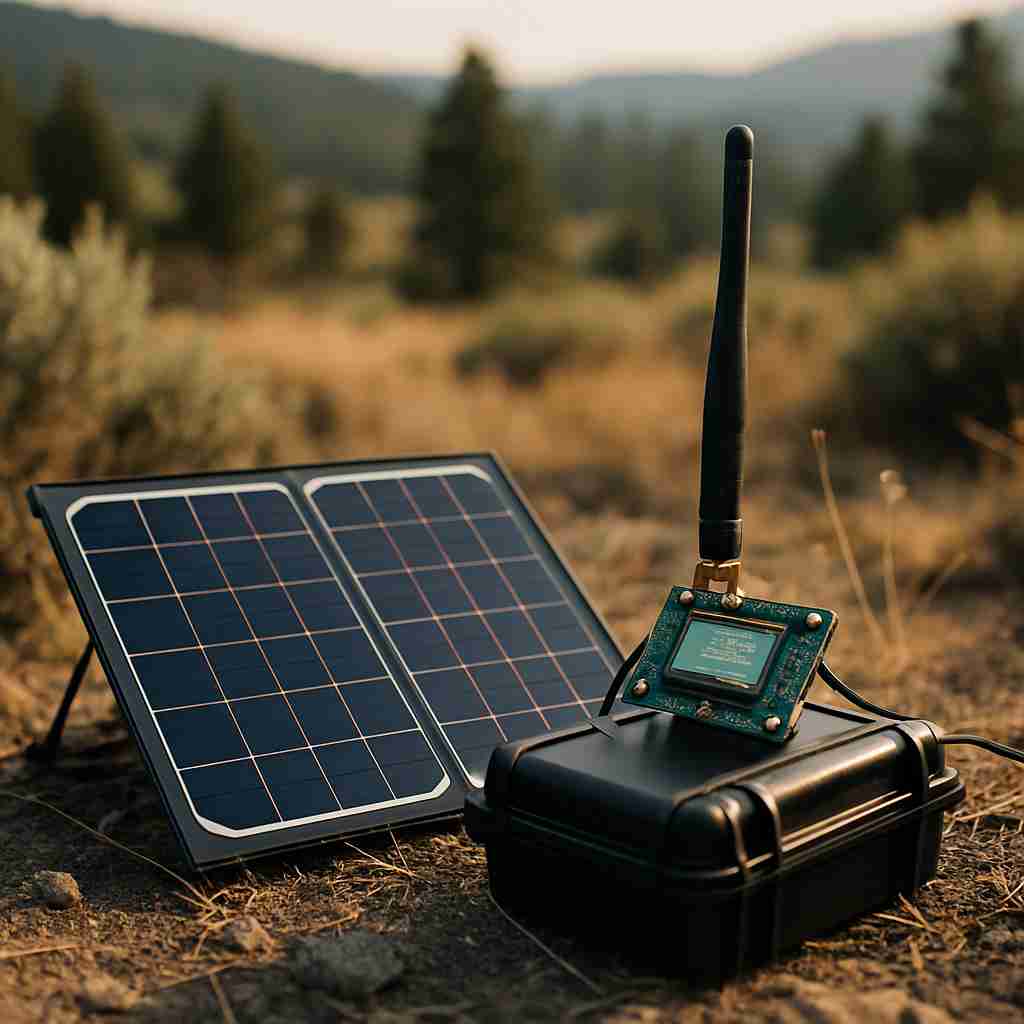
The operation of a solar-based mesh networking solution focuses on harvesting and storing solar energy to keep the node functional under various weather scenarios. Central to this setup is a photovoltaic solar panel, carefully aligned to optimize sunlight absorption. Throughout the day, sunlight is converted by the panel into electrical current, powering the node and replenishing a built-in battery for nighttime use. This battery guarantees uninterrupted communication even when sunlight is unavailable, ensuring continuous network access.
The sophistication of the Solar-Powered Meshtastic Node is reflected in its integration with LoRa mesh networking, recognized for its minimal energy usage and impressive communication range. These nodes establish a sturdy mesh network, with each node not only transmitting and receiving information but also forwarding data for others. This creates a dynamic and adaptable communication web where signal routes can be rerouted in response to physical barriers or temporary node failures.
Solar power solutions provide significant benefits compared to traditional energy sources. Chiefly, solar power substantially cuts down operational expenses by removing the necessity for continual fuel deliveries or complex grid hookups. Additionally, they represent a sustainable method by lowering carbon footprints and decreasing reliance on fossil fuels, supporting worldwide initiatives for cleaner energy adoption.
By merging solar technology with mesh networking, communication coverage expands while simultaneously strengthening system reliability in remote locations. Whether deployed at isolated research stations, expansive farmlands, or temporary installations for events and emergency scenarios, these nodes enable connectivity without compromising environmental values. For organizations and communities focused on sustainability yet demanding reliable technological infrastructures, solar-operated mesh networking solutions offer a promising path that fuses ecological mindfulness with advanced communication features.
The Mechanics of Off-Grid Mesh Communication
Within the complex domain of autonomous mesh networking, Solar-Powered Meshtastic Nodes stand out as a feat of design and engineering. Combining photovoltaic mesh network systems with solar energy, these nodes not only maintain their own power but also enhance communication infrastructure in isolated or underserved regions. Their function depends on a careful integration of renewable energy management alongside advanced technology, guaranteeing their role as a reliable pillar for communication in demanding conditions.
Central to a Solar-Powered Meshtastic Node is the intricate orchestration of energy harvesting, retention, and deployment. Solar panels relentlessly capture sunlight, transforming it into electrical energy stored in high-efficiency batteries designed to provide steady power even when sunlight is scarce. This fluid energy management is vital, enabling these nodes to function autonomously far from traditional power grids. Users engaging with these systems find themselves at the cutting edge of an innovation that converts isolation into broad connectivity.
Alongside their power management, these nodes employ LoRa-based mesh networking solutions that maximize communication range with minimal power use. This LoRa mesh technology forms the backbone of the mesh system, facilitating communication across impressive distances at low data rates. Its strength lies in sustaining links without exhausting power reserves, ensuring uninterrupted information exchange in expansive, rugged territories. Consequently, communities can stay connected where communication would otherwise be infeasible.
The experience for users of these devices is designed with simplicity and effectiveness in mind. Despite their technical sophistication, establishing a mesh network with these nodes often requires limited technical expertise. Both hobbyists and professionals value the plug-and-play design, which allows for rapid network deployment and seamless activation. The user interfaces are generally intuitive, enabling monitoring of node health, battery status, and network stability, thereby democratizing access to advanced tech in regions with scarce expertise.
As deployment continues, these systems prove invaluable not only in remote locations but also during emergencies when conventional infrastructure may collapse. Their robust design and self-sufficiency guarantee that essential communication channels remain operational, providing a critical lifeline when needed most. By removing reliance on vulnerable infrastructures and standard power sources, they enhance resilience and serve crucial roles in both pre-planned installations and urgent emergency scenarios.
To sum up, Solar-Powered Meshtastic Nodes exemplify modern engineering’s ability to harness natural resources and cutting-edge technology. They break down barriers created by geography and infrastructure deficits, delivering a trustworthy and sustainable answer in the pursuit of connectivity. With thoughtful design and operational excellence, these nodes continue to empower and inspire, vividly showcasing the future of standalone mesh connectivity.
Building a Long-Range LoRa Network
In the field of remote communication, there is an ongoing pursuit of sustainability and autonomy. One method that has drawn interest in this arena is the deployment of a Solar-Powered Meshtastic Node. These nodes tap into the sun’s plentiful energy to fuel LoRa-based communication networks, removing dependency on conventional power supplies and making them perfect for isolated or off-grid environments.
At the core of these nodes’ functionality is their use of LoRa connectivity, an essential element explained in previous discussions. Although LoRa networks are renowned for their minimal energy use and vast coverage, pairing this technology with solar energy adds a self-sustaining layer that enhances its effectiveness. A Solar-Powered Meshtastic Node accomplishes this by combining solar arrays with energy-saving batteries, designed to collect and store sunlight during daylight and supply power through nighttime or overcast periods.
The hardware configuration for these nodes goes beyond just solar panels and batteries; it also includes efficient power regulators and converters. These crucial components handle the energy input from solar panels and guarantee a stable power supply to the Meshtastic node. Accurately sizing the solar panel array and battery capacity is vital to ensure uninterrupted function even when sunlight is scarce. This estimation depends on variables such as the location’s latitude, average sun exposure, and the power needs of the LoRa equipment.
For hobbyists and professionals, assembling these solar-driven systems is made easier thanks to the modular design philosophy embraced by many Meshtastic node creators. Such modularity supports straightforward upgrades and the addition of new features. As innovations arise, users can effortlessly swap in more efficient solar panels or batteries without the need to replace the entire setup.
Beyond the technical factors, the deployment of solar-powered Meshtastic nodes has social and environmental significance. By cutting reliance on grid electricity and lowering carbon emissions, these nodes foster communication in remote areas while contributing to sustainable development goals. In places where power grids are unreliable or absent, these nodes present a dependable alternative, backing communication networks that bolster community resilience and growth.
Moreover, the practical value of solar energy in these contexts cannot be overstated. Whether on a mountain peak, deep within a forest, or in a remote desert, running conventional power lines isn’t feasible. Solar energy emerges as the best option, delivering a renewable, accessible power source that keeps these vital communication networks running continuously.
Looking ahead, the flexibility and scalability of solar-powered mesh communication networks are set to broaden their influence and availability. Combining this approach with advanced sensors and data acquisition tools could transform our interaction with the environment, even in the most isolated regions. As solar and LoRa technologies continue to evolve together, the opportunities for innovation in off-grid communication will expand, forging robust, sustainable networks worldwide.
Crafting Your Own DIY Solar Mesh Repeater
Constructing a home-assembled solar mesh amplifier is a fulfilling endeavor that boosts regional mesh Wi-Fi coverage and introduces sustainable communication technology to independent communication equipment. Before diving in, it’s important to grasp that a solar mesh repeater merges a mesh networking device’s features with solar energy, resulting in a self-powered communication hub.
**Components Required:**
1. **Solar Panels:** Select compact photovoltaic panels, usually ranging from 5W to 20W, based on your area’s sun exposure and anticipated power needs.
2. **Battery:** Choose a lithium-ion battery with a capacity between roughly 1600mAh and 5000mAh to keep your repeater operational during gloomy weather or after dark.
3. **Charge Controller:** This essential unit manages voltage and current from the solar panels to avoid overcharging the battery.
4. **Repeater Node:** The core of your system. A dependable option is the Solar-Powered Meshtastic Node, which works seamlessly with LoRa mesh networking.
**Assembly Steps:**
– **Solar Panel Placement:** Install your solar panel where it can soak up maximum sunlight. Mount it securely to withstand harsh weather.
– **Connect the System:** Attach the solar panel to the charge controller, then wire the controller to the battery and repeater node. Make sure all connections are tight to prevent power interruptions or damage.
– **Node Configuration:** Flash the Meshtastic firmware onto your node by connecting it to a computer and using the provided flashing tools, following instructions found in Meshtastic community resources.
**Configuration and Network Integration:**
Once the hardware is set up, integrate your node into the existing autonomous mesh communication system. Assign your repeater a unique ID with the mobile app, ensuring smooth message routing that bridges network gaps and extends coverage.
**Troubleshooting and Maintenance:**
Follow these tips to resolve typical problems and keep your solar energy mesh network extender running:
– **Power Issues:** If your repeater struggles on overcast days, increase battery capacity or add extra panels. Frequently inspect connections for looseness.
– **Node Connectivity:** Keep firmware up to date; modern versions improve stability and introduce features contributed by the community.
– **Physical Maintenance:** Regularly examine your setup for corrosion, physical damage, or wear—especially after severe weather. Clean the solar panel periodically to maximize energy intake.
In essence, building a solar mesh repeater meaningfully supports decentralized networking solutions. By harnessing solar power, these devices deliver resilient communication in remote or underserved locations. With the right knowledge, your solar-operated mesh networking solution—particularly using hardware like the Solar-Powered Meshtastic Node—can play a vital role in strengthening mesh network reliability.
Meshtastic Firmware and Continual Innovation
At the cutting edge of innovation in remote communication tools, the Solar-Powered Meshtastic Node merges photovoltaic mesh network systems with renewable energy. These specialized nodes, running on solar energy, enable operation in the most isolated environments without relying on traditional power grids. They push connectivity boundaries into areas where conventional infrastructure is either insufficient or absent.
The hallmark of a solar-operated mesh networking solution is its capacity for energy self-sufficiency. Through solar panels that capture and transform sunlight into electrical power—stored in attached batteries—these nodes maintain functionality despite changing weather. This approach not only minimizes ecological impact but also ensures communication robustness during crises or natural calamities when electrical supply may be disrupted.
Empowered by LoRa mesh networking, these nodes excel by supporting low-energy extended range network communication. LoRa mesh communication technology is especially beneficial for mesh networks due to its wide coverage and minimal power needs, perfectly suited for independent mesh network systems. Unlike conventional wireless frameworks, a mesh network relies on the cooperative effort of each node, relaying data step-by-step. This peer-to-peer communication platform enhances both the reach and dependability of the network.
Firmware serves as the critical intelligence behind these advanced networks. Meshtastic’s open-source mesh network solutions evolve continuously, fueled by a proactive community of developers and enthusiasts. Regular updates bring improvements such as optimized routing and enhanced user interfaces, increasing efficiency and user satisfaction in practical use. Keeping the firmware current is essential, as it guarantees the node is equipped with the newest security patches and performance boosts, thereby extending its operational life.
The updating process remains user-friendly and straightforward. Usually, it requires connecting the node to a computer or utilizing app interfaces, with over-the-air updates available when supported. Such methods reflect the blend of ease-of-use and technical sophistication that defines Meshtastic’s design ethos. Even novices find the system accessible, encouraging widespread use and experimentation across diverse user groups.
Continuous innovation springs from global collaborative efforts. The open-source wireless mesh networking thrives on collective input and open feedback, making sure enhancements resolve real challenges users face. This collaborative dynamic facilitates the rollout of new features that boost node functionality—like advanced routing protocols that cut down redundant transmissions or power-conscious algorithms that further prolong battery life.
In remote deployment scenarios, extra features bolster monitoring and telemetry functions. For example, nodes can be set up to observe environmental metrics or track high-value assets without quickly depleting energy stores. As open-source tools, these nodes offer limitless customization options—from minor UI adjustments to full system redesigns tailored to unique geographic or operational requirements.
Moreover, their modular design supports inventive incorporation into existing setups. Consider embedding a Solar-Powered Meshtastic Node within agricultural systems, enabling data exchange across widespread equipment, or integrating it into a disaster response network to facilitate seamless communication among emergency teams.
The inspiring narrative of solar-powered wireless mesh networks revolves around sustainability, innovation, and teamwork. These technologies exemplify how human ingenuity can harmonize with nature, solving complex challenges by delivering connectivity and valuable insights to previously unreachable places. As global demand for remote communication grows, these nodes offer solutions that are economically practical and environmentally responsible, effectively bridging gaps between developed and emerging regions. Powered by LoRa and enhanced through dynamic firmware, this solar-powered revolution demonstrates the remarkable results achievable when innovation meets necessity.
Conclusions
Blending solar power mesh systems with Meshtastic nodes fosters a sustainable future for standalone wireless communication. Especially in distant regions where standard networks often fail, this technology facilitates wide-area mesh networking. Making communication both more eco-friendly and accessible will depend heavily on adopting custom solar energy-powered network boosters and keeping Meshtastic firmware up to date. Ultimately, these advancements chart a path toward a globally connected world, anytime and anywhere.