Two-way radio systems are essential for enabling communication in a wide range of sectors, spanning from public safety to business uses. This article explores the progression of two-way radio communication, including advancements in digital wireless radios and portable radio equipment leasing, emphasizing the advantages and solutions that boost connectivity and operational productivity.
The Evolution of Two-Way Radio Systems
The journey of the two way radio system traces back to the early 1900s, transforming communication across numerous industries. In the 1930s, early breakthroughs enabled police forces to deploy primitive mobile radio devices, which, despite their bulkiness, expanded the concept of portability. Motorola then set a new benchmark in 1940 with the introduction of the Handie-Talkie, an AM portable two-way radio that became essential for field communication. This breakthrough played a critical role during World War II, ensuring effective military coordination.
Following the war, the 1950s introduced the VHF radio technology, which improved communication range and clarity, particularly in urban settings. The 1960s marked another significant milestone with the advent of compact transistor radios, ushering in lighter and more versatile communication devices.
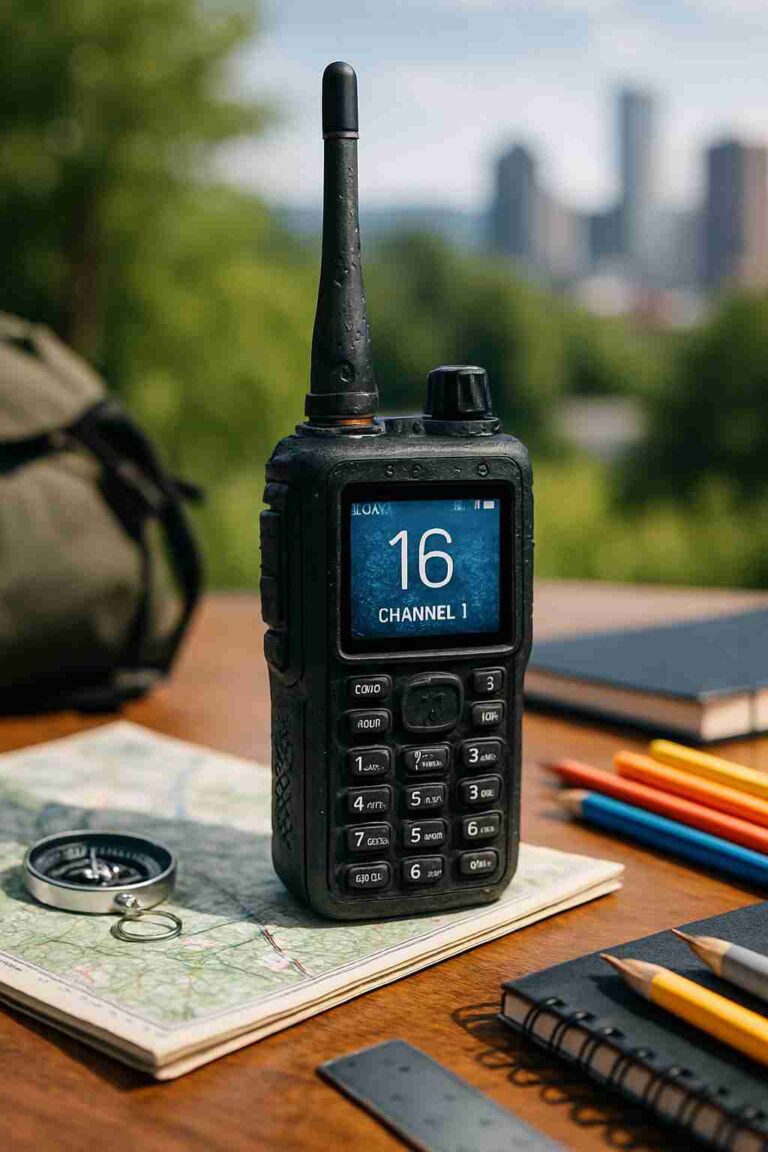
Today, the two way radio system remains vital in public safety and various sectors, with digital walkie talkies providing encrypted communication and GPS capabilities. These key developments highlight the evolution from basic communication tools to advanced systems that are central to smooth and effective operations.
Understanding Radio Communication Equipment
In a two way radio system, several essential wireless communication modules work in unison to enable clear communication. Critical to the operation are transmitters, receivers, antennas, and transceivers, each contributing a unique function. The transmitter transforms voice or data into radio waves that the receiver then picks up and decodes back into a comprehensible form. Two way transceiver antennas are indispensable for sending and capturing signals, boosting both the coverage area and signal precision.
By combining transmitter and receiver roles into one unit, transceivers provide an effective solution, especially for mobile or compact communication setups. The overall dependability of radio communication relies heavily on the smooth coordination and effectiveness of these components.
When comparing conventional versus trunked wireless communication systems, there are fundamental distinctions. Conventional networks dedicate specific channels to each communication, which can restrict operational flexibility and efficiency. Conversely, trunked radio systems dynamically assign channels to users as required, maximizing frequency utilization. These adaptable wireless connectivity solutions support scalability, making them ideal for scenarios with numerous users, like large organizations or events. A solid grasp of these aspects can greatly improve the implementation and management of effective two way radio system deployments across diverse uses.
Exploring Walkie Talkie Rentals in Business
Discovering the advantages of two-way radio leasing solutions uncovers notable benefits for enterprises and event coordinators. Whether managing sizable gatherings, short-term projects, or urgent scenarios, dependable communication remains essential. Access to premium equipment without the expense of long-term commitments is what renting walkie talkies offers. This adaptability enables companies to efficiently expand their communication demands by utilizing top-of-the-line two way radio systems that might otherwise involve a hefty upfront investment.
When selecting a portable radio hire provider, businesses ought to assess various aspects. Consider the assortment and performance of equipment provided to ensure it suits operational needs. Such rental services should present flexible agreements and include maintenance or technical support. Clarifying usage charges while opting for a vendor with a strong history of dependability can further facilitate swift communications during high-demand intervals.
Often, rental packages come with essential accessories and customization possibilities, increasing their value. By choosing rental options, businesses can tap into state-of-the-art technology, empowering them with robust two way radio systems to guarantee uninterrupted communication, no matter the situation or scale.
Advancements in Digital Two-Way Radios
Significantly improved by the shift from analog to digital technology, two way radio systems now boast greater capabilities. Clear communication without the typical static and noise found in analog versions is a hallmark of digital walkie talkies. This enhanced clarity comes from DSP technology in two-way communication devices, which compresses and filters voice data to ensure more efficient transmission. Another key advantage lies in the enhanced security features; professional digital radios support encryption, minimizing the chance of interception. Offering wider coverage as well, these devices ensure reliable connectivity across larger distances—a critical factor for industries reliant on dependable communication over vast areas. Despite these benefits, adapting can be challenging for users familiar with analog systems, especially since the initial upgrade cost might pose a barrier. Nevertheless, digital radios often prove to be cost-efficient digital radio equipment over time due to their robustness and efficiency. In sum, the digital revolution in radio communications equips organizations and businesses to uphold seamless and secure conversations, thereby boosting productivity and operational excellence. For today’s applications, a digital two way radio system is an essential asset.
Integrated Radio Communication Services
Integrated Radio Communication Services are essential for unlocking the full capabilities of a two way radio system, elevating operational efficiency to unprecedented levels. These offerings include system architecture, setup, upkeep, and operator education. They guarantee that communication infrastructures are precisely optimized to adapt to the continuous progression of two-way radio tech innovation. Designing the system means developing communication solutions tailored to meet specific industry needs—an indispensable phase for reaching optimal performance. Installation extends beyond mere equipment placement; it fortifies the infrastructure to ensure system durability even during demanding conditions.
Maintenance is the cornerstone of uninterrupted functionality. Consistent inspections and prompt troubleshooting enhance both performance and lifespan. Meanwhile, user training clarifies intricate operations, enabling personnel to fully exploit their two way radio system’s potential. Customized communication strategies are critical across various sectors, adjusting to unique environments ranging from dense metropolitan areas to extensive industrial sites.
This adaptability not only offers immediate operational success but also supports scalability as organizational demands evolve. Through the integration of these services, businesses reinforce their dedication to maintaining a flawlessly connected, future-proof team.
Conclusions
To sum up, contemporary communication systems and the progression of two-way radio communication provide unmatched advantages in boosting connectivity across diverse industries. From classic communication hardware to state-of-the-art digital walkie talkies and adaptable walkie-talkie leasing services, businesses gain the tools needed for seamless communication and operational efficiency. Committing to these technologies guarantees strong communication infrastructure capable of supporting both current and future demands.